
Academic Robotics Labs Are Suddenly Designing for Production
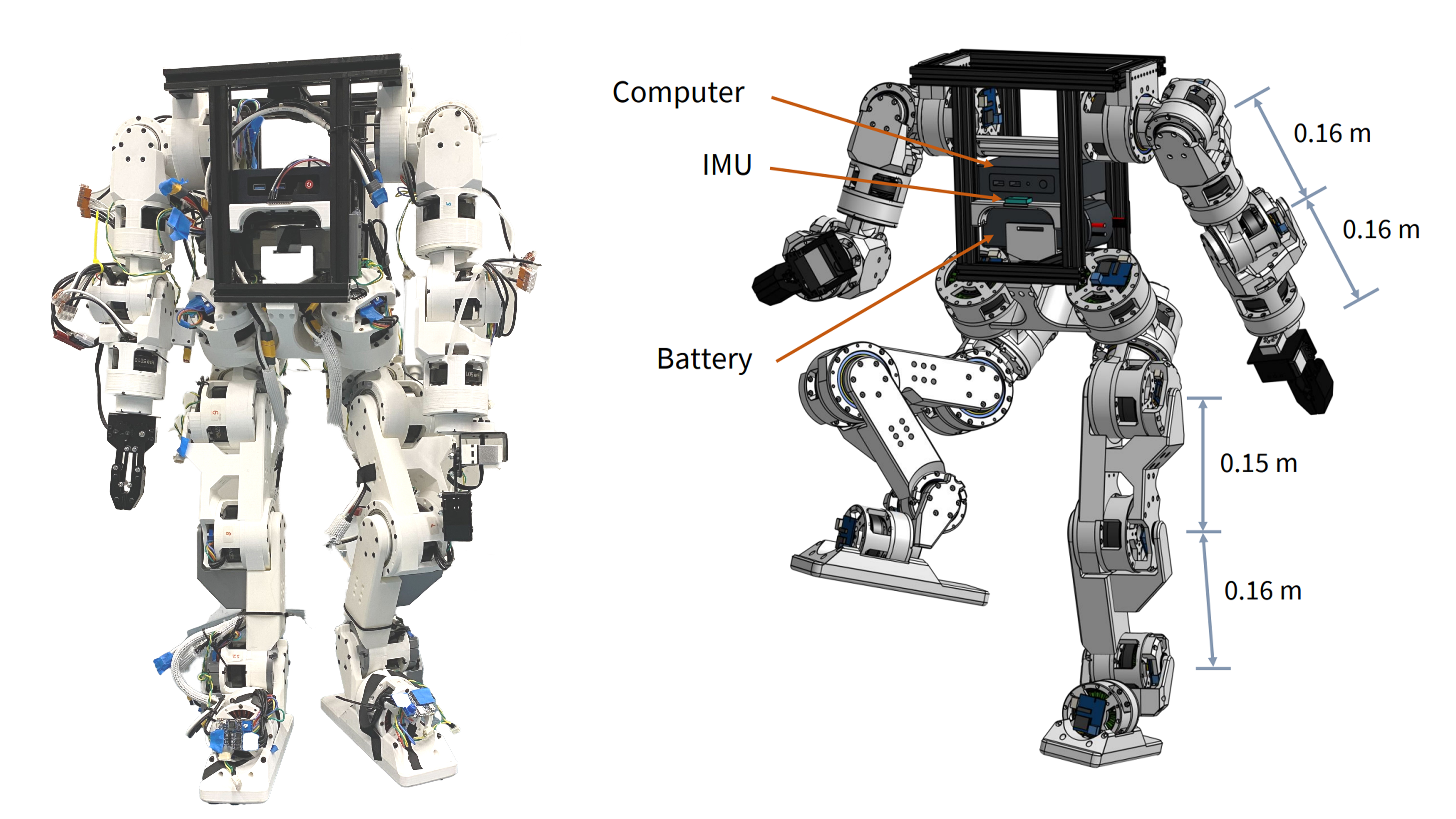
Something unusual happened in academic robotics this week, and it wasn't another benchmark breakthrough or theoretical framework. Researchers at Berkeley released a complete humanoid robot design that costs under $5,000 and uses 3D-printed actuators. EPFL published instructions for building centimeter-scale boats powered by sound waves. A maker turned 3D printer components into an automated microSD card library system.
These aren't traditional research papers demonstrating novel algorithms. They're production-ready designs with GitHub repositories, bill-of-materials lists, and assembly instructions. Academic robotics, traditionally focused on pushing theoretical boundaries with custom hardware that costs six figures and requires PhD-level expertise to replicate, is suddenly designing for the hobbyist in a garage.
The Berkeley Humanoid Lite exemplifies this shift. By combining off-the-shelf motors with 3D-printed cycloidal gearboxes and magnetic encoders, the team created modular actuators that anyone with access to a decent 3D printer can manufacture. This isn't about making research cheaper for other labs—it's about making research reproducible for everyone. The design is released as a customizable reference platform, explicitly inviting modification and iteration by communities far beyond academia.
This represents a fundamental rethinking of what academic impact means in robotics. For decades, university labs measured success by citations, Nature publications, and spinning out venture-funded startups. The actual hardware remained locked behind patents, specialized manufacturing, and proprietary knowledge. If you wanted to build on academic research, you either needed institutional resources or you started from scratch.
The new model looks different. EPFL's sound-powered robots leverage Helmholtz resonance physics to create acoustic thrust—fascinating science, certainly. But the real contribution is demonstrating that centimeter-scale autonomous movement doesn't require expensive piezoelectric actuators or complex electronics. The principle works with materials and tools available to high school robotics clubs.
Even the microSD library changer, built by a maker rather than a formal research institution, reflects this ethos. It solves a real problem using T-bot kinematics and rack-and-pinion grippers inspired by 3D printer designs. The innovation isn't in inventing new mechanisms—it's in showing how existing, accessible technologies can be recombined for novel applications.
This democratization arrives at a critical moment. As articles about Meta deploying robots in data centers and Waymo's lobbying spending demonstrate, industrial robotics increasingly belongs to companies with massive capital. The gap between what Google's labs can build and what independent researchers can afford widens every quarter.
Open, accessible designs from academic institutions provide a counterweight. They ensure that robotics innovation doesn't become exclusively a game for trillion-dollar companies. When a Berkeley grad student can replicate a humanoid platform for less than a used car costs, the barrier to entry for robotics entrepreneurship fundamentally changes.
The traditional academic model treated hardware as a means to demonstrate algorithms. The new model treats accessible hardware design as a research contribution in itself. It's not replacing theoretical work—RoboCup's 11-versus-11 humanoid soccer match and research on robot sustainability metrics show pure research continues thriving. But it's adding a parallel track where impact means enabling thousands of builders to iterate on your foundation.
This won't replace venture-funded robotics companies or deep-pocketed corporate labs. But it does create an ecosystem where innovation can happen outside those structures. And in a field increasingly defined by who can afford the best hardware, that accessibility might be the most important research contribution of all.