
Polymarket has reportedly been paying creators to post fake betting videos
The Wall Street Journal reviewed 1,105 videos along with guidance given to creators for crafting their posts.
Latest news and articles about research

The Wall Street Journal reviewed 1,105 videos along with guidance given to creators for crafting their posts.

NASA's Perseverance rover has traveled 26.2 miles (a marathon distance) on Mars in five years, becoming only the second rover to achieve this milestone after Opportunity. The rover reached this distance while exploring terrain west of Jezero Crater, where it has discovered evidence of an ancient lake and potential signs of ancient microbial life.
Güdel AG will demonstrate an advanced grinding automation system at Automate 2026 that combines vertical and horizontal motion systems to expand robot workspace beyond traditional stationary setups. The system uses a FANUC R-1000 robot mounted on Güdel's TrackMotion Vertical and Floor systems to perform large-scale grinding on difficult-to-reach parts, reducing the need for multiple robots while improving process stability and repeatability.

NASA is testing the Ernest (Exploration Rover for Navigating Extreme Sloped Terrain) prototype rover, which features active suspension and can individually lift its wheels to climb obstacles, achieving speeds of 0.6 mph compared to Perseverance's 0.1 mph. The prototype, tested in the Colorado Desert, demonstrates new mobility approaches using powered joints and multiple gaits that could enable future Mars and lunar missions to cover more ground with greater autonomy from Earth-based controllers.

Carnegie Mellon's VideoManip system represents a genuine breakthrough in robot learning — not because it's flashy, but because it solves a fundamental data problem that's been holding the field back for years.
AURA Foresight has been selected as one of four finalist teams in the XPRIZE Wildfire Autonomous Wildfire Response competition, a $5 million global challenge to develop autonomous technology for detecting and responding to wildfires. The system combines fixed sensors, artificial intelligence, and swarms of autonomous flying robots to detect ignitions within minutes and coordinate rapid intervention before fires grow out of control, with finals taking place in Alaska.
Robot Talk Episode 161 features an interview with Allison Okamura, a Stanford University professor specializing in haptics, teleoperation, and medical robotics. The podcast discusses her research on collaborative haptic systems that enable advanced touch-based robotic interaction, covering applications in teleoperation, virtual reality, and medical robotics.

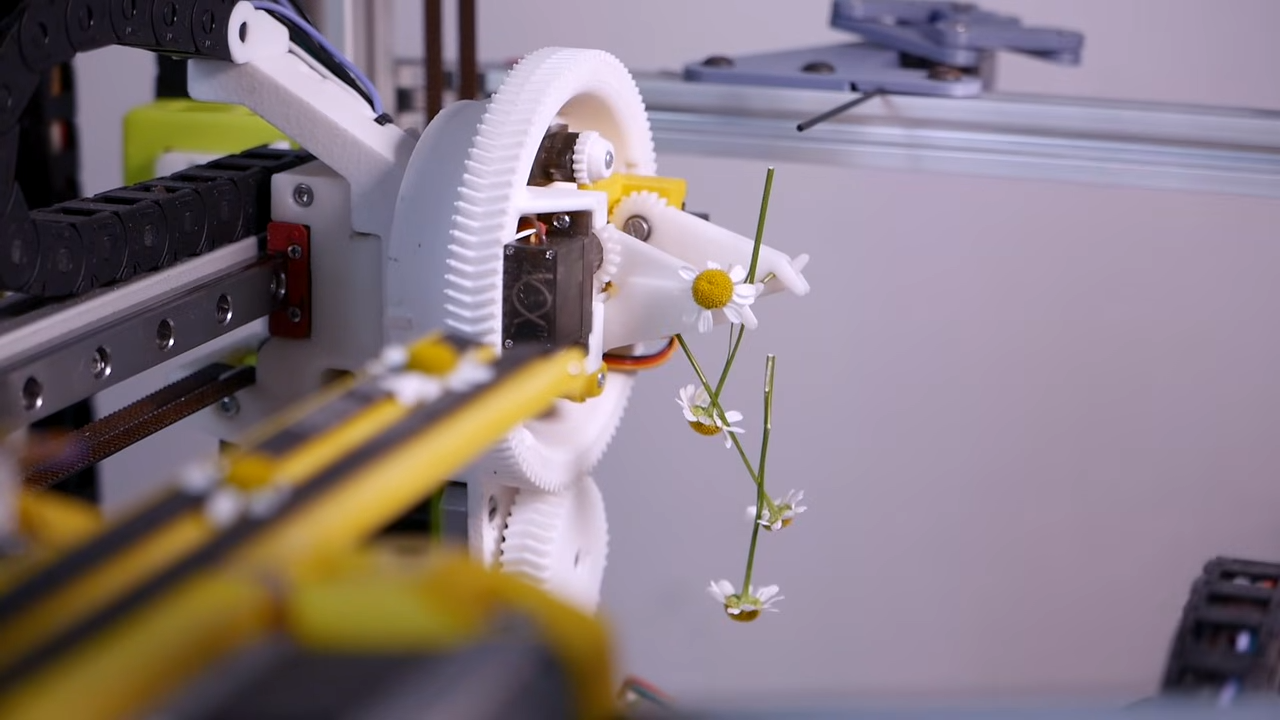
The WEEDINATOR autonomous agricultural robot project has reached a significant milestone after nearly a decade of development, demonstrating effective mechanical weed removal using a modified commercial Iseki tractor base. The system uses computer vision (OpenCV and YOLO26n on a Jetson Nano) combined with hydraulically-controlled cultivator claws for autonomous weeding in three axes.
SpaceX and other companies are pursuing the concept of building AI data centers in orbit to leverage abundant solar energy and avoid Earth-based environmental and infrastructure constraints. However, the article examines significant engineering challenges including radiation damage, heat dissipation difficulties, expensive repairs, and launch costs that make orbital data centers far more complex than launching satellites alone.
Researchers leveraged an OpenAI reasoning model to assist in diagnosing rare genetic diseases in children, successfully identifying 18 new diagnoses in cases that had previously remained unsolved. This application demonstrates the practical use of advanced AI reasoning capabilities in clinical settings to improve diagnostic outcomes for rare pediatric conditions.

A maker is developing a custom motor actuator designed for humanoid robotics applications, inspired by MIT research but incorporating a cycloidal gearbox instead of a planetary design to reduce backlash. Initial testing revealed the prototype achieved 7 Nm of torque (below the 20 Nm target) and exposed manufacturing tolerances issues, though CAD files are being shared publicly for refinement and iteration.
CMU researchers have developed VideoManip, a system that trains robots to perform dexterous manipulation tasks by converting videos of people interacting with objects into training data. The system reconstructs 3D hand movements and object interactions from ordinary internet videos, eliminating the need for specialized equipment or teleoperated demonstrations, and addresses a major bottleneck in robot learning by enabling robots to learn from internet-scale datasets.
This article evaluates the suitability of humanoid robots for surface finishing manufacturing applications like sanding, polishing, and grinding. The analysis concludes that humanoids are not well-suited for factory floor operations because their legs, multi-fingered hands, and heads add unnecessary complexity and cost without providing manufacturing advantages—instead, traditional dual-arm industrial robot configurations mounted on fixed rails are more efficient for speed, precision, and economics of scale.
MIT and University of Pennsylvania researchers developed MIGHTY, an open-source trajectory-planning system that enables unmanned aerial vehicles (UAVs) to navigate complex environments with obstacle avoidance in milliseconds while optimizing flight paths. The system uses novel mathematical formulations to generate smooth trajectories faster than existing methods while running efficiently on onboard computers, with potential applications in search-and-rescue, delivery, and industrial inspection.
OpenAI and Molecule.one have demonstrated a near-autonomous AI chemist using GPT-5.4 that successfully improved a challenging drug-making reaction in medicinal chemistry. This advancement shows how large language models can be applied to optimize complex chemical synthesis processes, representing progress in AI-assisted scientific research and automation of chemistry workflows.
LifeSciBench is a new expert-authored and expert-reviewed benchmark designed to evaluate AI systems on real-world life science research tasks and decisions. The benchmark provides a rigorous evaluation framework for assessing how well AI models can handle complex scientific workflows in the life sciences domain.
UK government partners with Google DeepMind to build a new AI-powered prototype aimed at faster housing decisions.
A collection of stories about how militaries are using AI models to make decisions. This subscriber-only eBook is a package of six stories that were originally published in MIT Technology Review betwe...

Casey Harrell's 3,800 hours with a brain-computer interface represents the first time we can study what happens when medical AI leaves the lab and enters daily life. The numbers tell a story about technology that actually works—and what that means for robotics.

A pair of prototype Ray Ban Meta glasses at AWE 2026 show that NFC charging can achieve similar performance to the pogo pins common in smart glasses today.

Researchers at the Istituto Italiano di Tecnologia studied elephant trunk skin structure and discovered a functionally zoned architecture with distinct upper and lower regions—the upper skin acts as armor while the underside is highly flexible for grasping. The findings, published in PNAS Nexus, reveal how subsurface dome-shaped structures amplify tactile signals and could inspire the design of next-generation soft robotic grippers with improved tactile sensing and mechanical protection.
Google researchers Rohin Shah and Four Flynn present the AI Control Roadmap, a security framework designed to manage increasingly capable AI agents through a defense-in-depth approach that combines traditional safeguards with model alignment and system-level controls. The roadmap treats AI agents as potential insider threats, using threat-modeling frameworks and supervisor AI systems to detect, prevent, and respond to misaligned behaviors while maintaining scalable security as AI capabilities advance.

NVIDIA's Blackwell platform swept MLPerf Training 6.0 benchmarks, achieving the fastest training times across all seven benchmarks and scaling to 8,192 GPUs—the largest Blackwell-based submission to date. The results showcase performance improvements including up to 1.6x faster training with the GB300 NVL72 over GB200 NVL72, and demonstrate Blackwell's capability for large-scale mixture-of-experts model training including DeepSeek-V3 671B and Llama 3.1 405B.
Kawasaki Robotics will debut its RL030N eight degree-of-freedom robot platform designed for physical AI applications at Automate 2026 in Chicago, along with demonstrations of its Pulseboard inspection technology and other industrial robots. The RL030N combines high-speed motion, enhanced dexterity, and real-time control capabilities to bridge the gap between traditional industrial robotics and AI-driven applications requiring adaptive motion and confined-space manipulation.
This newsletter roundup covers several AI and robotics developments: Casey Harrell becomes the first "power user" of a brain-computer interface (BCI) for speech, using the device thousands of hours to work and browse the web despite ALS; South Koreans show the highest global optimism about AI adoption at 84%, contrasting sharply with American skepticism; and Alibaba unveils AI models specifically designed for robots as part of a broader shift toward embodied AI applications.
Built Robotics is partnering with the University of Pennsylvania's Safe Autonomous Systems Lab (xLAB) to develop physical AI for construction sites, leveraging Built's 50,000+ hours of operational data and new data-collection robots. The collaboration aims to create a foundation model for safe human-machine coexistence on jobsites by systematically collecting edge case data and training AI models for improved human detection and hazard identification in complex construction environments.
OpenAI has introduced Deployment Simulation, a new methodology that uses real conversation data to predict AI model behavior before production release. The approach aims to improve both safety testing and evaluation accuracy by simulating how models will perform in actual deployment scenarios rather than relying solely on controlled testing environments.

Nathaniel Nifong has developed Stringman, an open-source ceiling-mounted robotic crane system that uses wire suspension to autonomously identify and pick up items scattered around a room. The system uses computer vision and a robotic gripper, with firmware based on LeRobot available on GitHub, and the creator is offering both build instructions and ready-made kits for interested users.
While Western nations debate AI ethics and regulation, South Korea has quietly become the world's test lab for artificial intelligence deployment. The difference isn't technology—it's cultural optimism backed by strategic government policy.

UCF researchers are studying how wing shape and motion affect the water-to-air transition (egress) of drones using experimental fluid mechanics techniques with 3D-printed wings and water tanks. The research aims to develop mathematical models that improve amphibious UAV performance for military and civilian applications like search-and-rescue and ocean monitoring by understanding the lift overshoot and control instability that occurs during egress.

Casey Harrell has logged 3,800 hours using a brain-computer interface — more than most people spend on social media apps. His experience reveals something nobody expected: neural technology has quietly crossed the threshold from experimental to everyday.
A paralyzed ALS patient named Casey Harrell has become the first sustained power user of a brain-computer interface (BCI), logging over 3,800 hours of independent use in 22.6 months after electrode implantation. Developed by UC Davis researchers, the system decodes neural activity from his speech motor cortex to convert brain signals into speech with up to 97.5% accuracy across a 125,000-word vocabulary. The breakthrough demonstrates the viability of long-term BCI implants for communication and shows potential for broader applications beyond speech.

Researchers at EPFL's Neuro-X Institute developed a simple color-feedback system that helps users learn to control prosthetic devices and rehabilitation interfaces faster. In studies with 106 participants including stroke patients, real-time color cues (green for success, red for failure) produced measurable improvements in motor control within fewer than 20 practice trials, with benefits persisting even after feedback was removed.

Researchers at Universidad Carlos III de Madrid have developed an AI-based voice recognition system for a robotic rabbit named Mía that can identify users on first greeting without requiring a setup phase. The on-device, privacy-preserving system uses only the robot's microphone and is being tested in Madrid day centers to provide personalized affective stimulation and social engagement for elderly people with cognitive decline.
Cornell University engineers have developed the Cross-Link Collective, a robotic system of dozens of small modules that self-organize and move cohesively without centralized control, demonstrating how mechanical intelligence and physical interactions can enable coordinated behavior. Each module oscillates between two shapes and uses weak Velcro patches to temporarily latch onto neighbors, with the collective adapting to challenging environments by forming and breaking connections to maintain cohesion and prevent jamming. The research, published in Science Robotics, shows how minimal computation combined with physical design can create resilient, distributed systems inspired by soft matter and active gels.

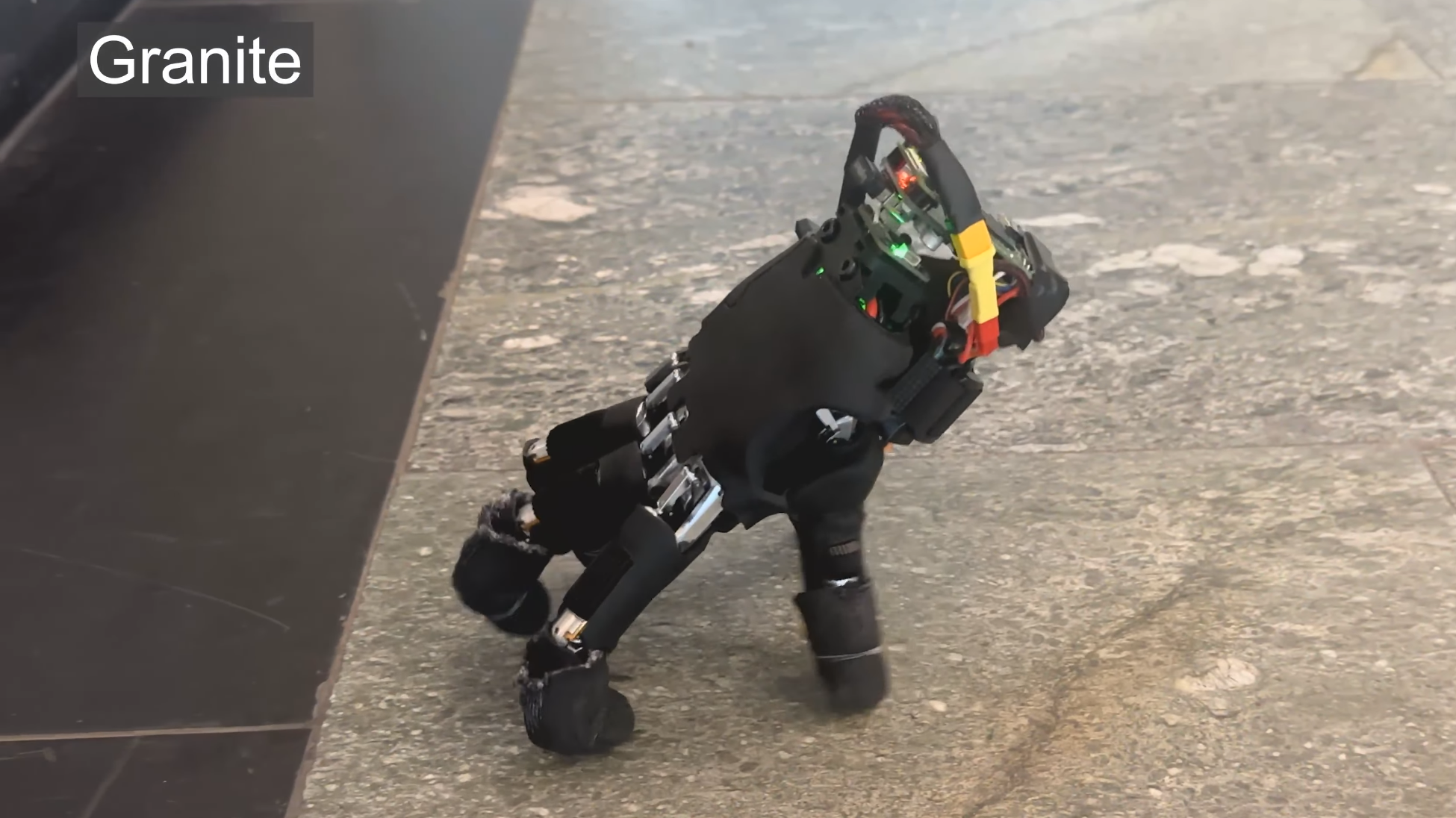
Researchers at Graz University of Technology have developed a four-legged detection robot equipped with sensors to safely identify hazardous materials during firefighting operations. The remote-controlled robot was designed in collaboration with fire services and emergency responders, using commercially available components and integrating into standard operational procedures to allow firefighters to assess dangerous situations without entering hazard zones themselves.

While everyone obsesses over humanoid robots in warehouses, agricultural robotics has quietly become the most sophisticated deployment of autonomous systems in the real world. From disease detection to VR-trained robots, farms are solving problems factories haven't even acknowledged yet.

A maker created self-moving 3D-printed chess pieces called MiniBots, each equipped with an ESP32-C3 microcontroller, stepper motors, magnetometers, and LiPo batteries that communicate via ESP-NOW wireless protocol. The open-source project demonstrates a generic modular robotics design beyond chess applications, with positioning tracked through electromagnets embedded in the board and magnetometer triangulation.
MassRobotics announced the 2026 Robotics Medal and Rising Star award winners at IEEE ICRA in Vienna: Dr. Allison Okamura (Stanford) received the Robotics Medal for foundational research in haptics, medical robotics, and contributions to robotics education and mentorship; Dr. Ayoung Kim (Seoul National University) received the Rising Star Medal for pioneering work in lidar place recognition and multi-sensor SLAM for autonomous systems.
Industry experts at the 2026 Robotics Summit & Expo discussed the current state of humanoid robot development, with Boston Dynamics' Alberto Rodriguez highlighting the company's strategy to build general-purpose Atlas robots for logistics and manufacturing applications, including plans to deploy 25,000 humanoids and reach 30,000 units per year by 2028. Panelists from Boston Dynamics, Agility Robotics, and other companies emphasized the challenges of designing bipedal robots that can work safely alongside human workers and adapt to diverse, one-of-a-kind jobs rather than single applications.
Microsoft's Project Ire, an autonomous malware-classification AI agent, successfully identified a previously undetected variant of LOTUSLITE, a Windows DLL backdoor, by analyzing its behavioral patterns rather than relying on signature matching or IOCs. The agent produced a detailed function-by-function analysis without human intervention, catching a malware sample that evaded detection by six major EDR vendors and wasn't in existing indicator lists. This demonstrates the potential of LLM-driven behavioral reverse engineering to identify novel malware variants that share tactics and procedures but lack known indicators of compromise.
Google DeepMind just committed $10 million to study multi-agent AI safety—a problem most people don't know exists yet. As companies race to deploy autonomous AI agents that can act independently online, we're building a system where millions of AIs will soon interact with each other, and nobody has seriously tested what happens next.
Robot Talk Episode 160 features Edward Mehr, Co-Founder and CEO of Machina Labs, discussing their RoboCraftsman—an AI-driven robotic system that uses advanced manufacturing techniques to shape complex metal parts for aerospace, defense, and automotive industries. The episode explores how Machina Labs is integrating artificial intelligence and robotics into flexible, on-demand production systems to modernize metal forming manufacturing.
MIT Technology Review Explains: Let our writers untangle the complex, messy world of science and technology to help you understand what's coming next. You can read more from the series here. Your brai...
From rice metamaterials to soccer analytics labs, some of the most interesting robotics and AI research isn't trying to fix anything. It's exploring for the sake of understanding—and that might be exactly what the field needs right now.

NASA's AstroPix gamma-ray detector technology will be demonstrated in orbit aboard the Fly Foundational Robots mission launching in late 2027, where a robotic arm from Motiv Space Systems will pick up and reposition the sensors. The AstroPix chips, developed by NASA's Goddard Space Flight Center, use silicon pixel detectors similar to smartphone camera sensors but optimized to measure gamma rays in the 20,000 to 700,000 electron volt range, filling a sensitivity gap for observing gamma-ray bursts and active galaxies powered by black holes.

Researchers at NTNU conducted a controlled study with Pepper, a social humanoid robot, to evaluate its potential as a playmate in physical games like trash can basketball. The study found that robots can be good playmates when they exhibit natural, responsive, and flexible behavior aligned with human expectations, but poor pacing, overly competitive behavior, or stiff movements cause frustration and reduce engagement.
Carnegie Mellon University's Robotics Institute developed Erwin, an autonomous robot that detects fire blight disease in orchards using computer vision and robotic arms, winning the Amiga Innovation Award at the 2026 Farm Robotics Challenge. The system combines GPS, LIDAR, and AI-trained cameras to navigate orchard rows, identify infected trees, classify disease severity, and create spatial disease maps to assist farmers in targeted pruning during dormant seasons.

MIT and Woods Hole Oceanographic Institution researchers developed Sonar-MASt3R, a technique that fuses sonar acoustic data with optical camera imagery to enable underwater vehicles to navigate and map murky, low-visibility waters in real-time. The system combines echolocation-like sonar mapping with detailed visual recognition, allowing vehicles to safely operate in sediment-clouded environments for scientific exploration, underwater construction, and deep-sea recovery applications.

Researchers at NYU Tandon and Bowling Green State University developed a smartphone-based augmented reality system that helps humans better understand and predict robot behavior by overlaying the robot's planned path, destination, and safety zones in real time. The study found that users viewing AR visualizations of robot intentions showed significantly improved situational awareness and ability to anticipate machine actions, addressing a key challenge in human-robot collaboration and workplace safety.