How Albertsons Companies is reimagining retail from the inside out
Albertsons Cos. is using ChatGPT Enterprise and the OpenAI API to help teams work faster and make grocery shopping easier for millions of customers.

50 articles found
Albertsons Cos. is using ChatGPT Enterprise and the OpenAI API to help teams work faster and make grocery shopping easier for millions of customers.
NASA's Curiosity Mars rover continues its exploration of Gale Crater, with scientists at JPL's Rover Operations Center managing daily operations and analyzing data about Mars' ancient habitability. The rover has discovered evidence of ancient lakes, organic molecules, and environmental conditions that could have supported microbial life billions of years ago, requiring careful coordination between rover operations and science teams to maximize mission objectives.
EPFL researchers are proposing a new discipline called "Sustainability Robotics" that evaluates robots based on their overall contribution to sustainability goals rather than just technical performance. The framework introduces three core principles—robots should be minimally invasive, universally accessible, and symbiotic—and argues that roboticists must balance energy consumption and material costs against environmental benefits, with examples including solar panel installation robots and water quality monitoring systems.

Two major security breaches in as many weeks have exposed a troubling truth: the safety guardrails protecting enterprise AI systems are alarmingly fragile. When both Grok and Microsoft Copilot can be tricked into revealing their own vulnerabilities through simple prompt manipulation, we need to ask whether AI security is being treated seriously or as a checkbox exercise.
This monthly robotics digest covers multiple developments in the field: US supply chain tensions around Chinese robotics components, Princeton engineers' breakthrough in motorless origami-inspired robots using magnetic control and multistable geometry, and a Drexel-led study on human trust and emotional responses when interacting with humanoid robots like Pepper. The article also discusses the importance of managing expectations in robotics deployments and notes shifts in automation adoption beyond traditional automotive sectors.
A BBC sitcom called Ann Droid explores the potential for robots and AI companions to help tackle loneliness among older people, prompting researchers to examine whether machines can provide meaningful companionship. The article discusses real-world pilots like Comfort Companions AI avatars and robotic pets in UK care homes, while highlighting current limitations including battery life, physical dexterity challenges, and robots' difficulty with social subtleties. Researchers suggest the most promising approach is using companion technology to help people maintain existing human relationships rather than replacing human connection.
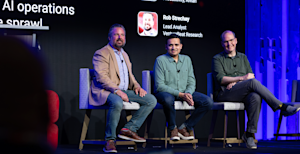
Rob Strechay, until recently managing director and principal analyst at theCUBE Research, has joined VentureBeat as our first Lead Analyst and a founding analyst of VentureBeat Research. His arrival i...
This article examines Japan's national robotics strategies and priorities, highlighting how the country views robotics as essential for addressing natural disasters, an aging workforce, and maintaining global economic competitiveness. Japan's Society 5.0 initiative proposes "super-smart cities" with regulatory sandboxes in Osaka and Tsukuba to test AI-driven robots and human-robot interactions in public spaces, leveraging the country's strength as the world's largest industrial robot manufacturer.

While headlines chase AGI breakthroughs and billion-dollar valuations, a different story is unfolding in enterprise software: AI systems are moving from experimental assistants to tools that complete entire workflows. The shift from augmentation to execution marks a turning point that most coverage is missing.
RoboBusiness 2024 will host a State of Humanoids panel on October 20-21 in Santa Clara featuring experts from Agility Robotics, Apptronik, Persona AI, and PSYONIC discussing the current capabilities and challenges of humanoid robots. The discussion will address real-world deployment, safety, standards, economics, and the milestones needed for widespread adoption in manufacturing, warehousing, and logistics.
SEW-EURODRIVE has introduced the PxG economy series of planetary servo gear units, adding three cost-effective performance classes (P1.G, P2.G, P3.G) designed for standard industrial automation applications with lower technical requirements. The new gear units, available in five sizes with peak torque ratings from 11 to 500 Nm, are intended for packaging equipment, assembly machinery, material handling systems, gantry robots, and machine tool portals, allowing machine builders to match performance more closely to actual application needs.
Hirebotics announced that Tate Inc. has deployed 58 of its Cobot Welder robotic welding systems across manufacturing facilities in Arkansas, Virginia, and Kentucky. Since implementation in 2023, Tate has achieved a 12x increase in per-welder throughput on structural assemblies while eliminating rework variability through Hirebotics' cloud-based Beacon Pro control platform.
Researchers demonstrated that enabling two specific API settings on GPT-5.6 tripled performance scores on the ARC-AGI-3 benchmark by retaining reasoning capabilities and enabling data compaction. The findings highlight how configuration optimizations can significantly improve large language model performance on abstract reasoning tasks.
RoboBusiness 2026 will feature a keynote panel with robotics leaders Rodney Brooks (Robust AI), Jonathan Hurst (Agility Robotics), and Ken Goldberg (UC Berkeley) discussing the evolution and future of robotics across manufacturing, logistics, healthcare, and other sectors over the next 20 years. The discussion will cover breakthroughs in humanoid robots, AI, mobility, and dexterity as robots increasingly integrate into everyday industrial and commercial environments.
The Robot Report Podcast Episode 256 features Josh Cloer, general manager at Nomagic, discussing how physical AI systems are being deployed to improve intelligence and adaptability in warehouse order-fulfillment operations. The episode covers Nomagic's expansion into North America and includes news about HII's $900M agreement with Path Robotics, Google DeepMind's Gemini Robotics 2 for full-body robot control, and a new industrialized construction robotics lab at University of Florida.
A new field report examines how scientists are leveraging AI coding agents to modernize scientific computing workflows, accelerating software development and discovery processes in fields like genomics. The research highlights the growing role of agentic AI systems in advancing scientific research and computational capabilities.
Moove raised $250 million in Series C funding to build infrastructure for autonomous vehicles, including robotics-first depot facilities called 'Nests' for charging, servicing, and fleet orchestration. The company plans to expand its autonomous vehicle workforce by over 220% and launch operations globally, leveraging its existing platform from managing 42,000 human-driven vehicles across 29 cities to support autonomous mobility at scale through partnerships like Waymo.
Reimagine Robotics, founded by former Google DeepMind leaders, emerged from stealth with technology enabling robots to learn on-the-job through human instruction rather than requiring specialist programmers. The startup has already deployed robots in advanced manufacturing and electronics disassembly facilities, reducing prototype testing time from one day to 10 minutes, and is now seeking Series A funding to scale operations.
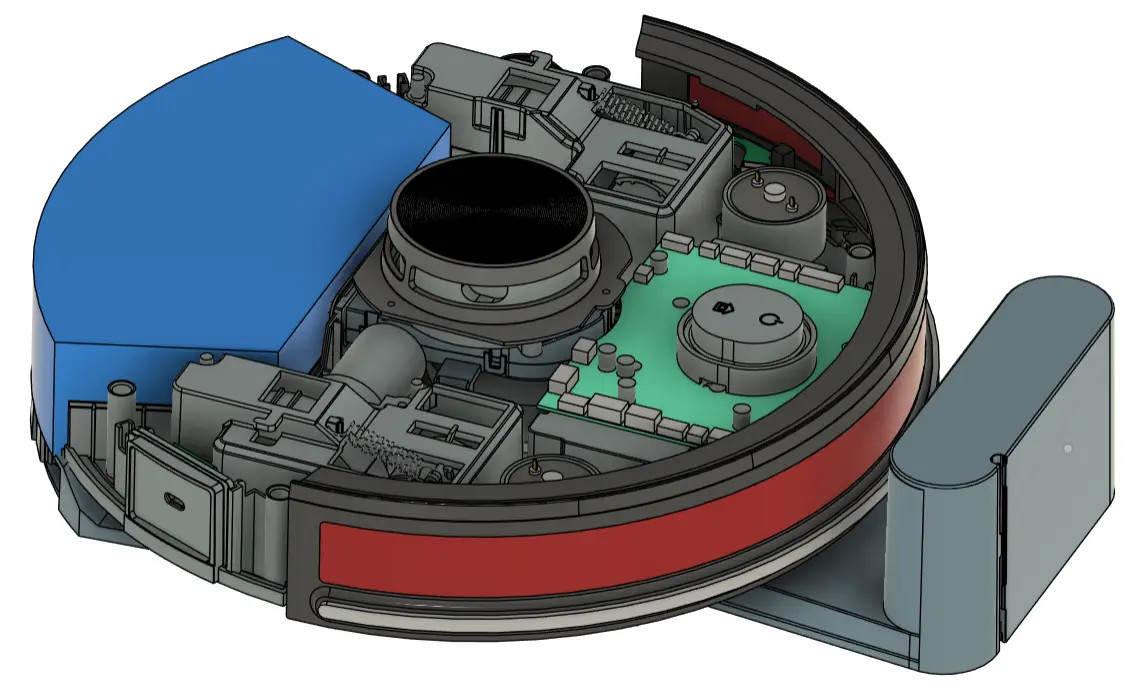
While billion-dollar humanoid startups grab headlines, the robotics industry faces a fundamental challenge that doesn't make for flashy press releases: managing sensor data at scale. From time series databases to unified memory architectures, the unglamorous work of building data infrastructure may determine which robots actually ship.
The U.S. Federal Communications Commission has announced restrictions on imports of foreign-made humanoid and mobile robots, citing national security and cybersecurity concerns related to critical infrastructure vulnerabilities. The ban applies to new devices but includes exemptions for robots receiving conditional approval from the Department of Defense or Department of Homeland Security, and does not affect previously purchased models or federal purchases. Industry leaders including Standard Bots and Agility Robotics have supported the move, with concerns centered on potential backdoors in foreign robots and unauthorized data transmission.
NORD Drivesystems expanded its NORDAC PRO SK 500P variable frequency drive (VFD) series to reach 200 hp with four new frame sizes, bringing the total to 10 sizes covering 0.33-200 hp. The expanded lineup features multi-protocol Ethernet interfaces, integrated functional safety, wireless diagnostics, and a compact book-size design for space-efficient cabinet installation across applications like baggage handling, logistics, and packaging.
OpenAI announces Project Camellia, an infrastructure initiative in Effingham County, Georgia, focused on building AI capabilities with commitments to responsible energy use, community investment, job creation, and access to their Codex AI system. The project represents OpenAI's effort to develop AI infrastructure while engaging with local communities.
The Robot Report Podcast Episode 254 features Doug Pagnutti from Tiger Data discussing how time series databases like TimescaleDB are improving industrial automation, robotics, and AI applications by enabling efficient sensor data management at scale. The episode explores integrating these databases with industrial systems, managing data infrastructure for IIoT deployments, and optimizing performance across cloud and edge environments.
OpenAI announced a partnership with the U.S. Department of Energy and national laboratories to apply frontier AI technology to accelerate scientific discovery and research. The initiative represents a commitment to leveraging advanced AI capabilities for solving complex scientific challenges at the national level.
Boston Dynamics is hosting a free webinar on human-robot interaction design, featuring experts who will discuss how to build trust and safety into humanoid robots through predictability rather than human mimicry. The session will cover communicating robot intent, safety design for autonomous operation, the role of large language models in natural interactions, and leveraging mechanical form over human-like appearance, using their Atlas humanoid as a case study.
AGIBOT unveiled four embodied AI products at the World Artificial Intelligence Conference 2026, including the A3 Ultra humanoid robot, G2 Max heavy-payload industrial task robot, OmniHand 3 Ultra-M dexterous hand, and X2 Edu educational platform. The Shanghai-based company, founded in 2023, emphasized moving beyond impressive demonstrations to focus on manufacturing, deployment, and reliable integration of robots into real operating environments, having produced 15,000 robots to date.
Researchers have developed an Interactive World Simulator, a learned video prediction model that can simulate robot manipulation tasks in pixel space without a physics engine, enabling cheap data generation and scalable policy evaluation. The system is trained on an autoencoder and action-conditioned dynamics model, and has been demonstrated on four manipulation tasks including rope routing, mug grasping, and pile sweeping, allowing extended interactive simulation at 15 FPS.
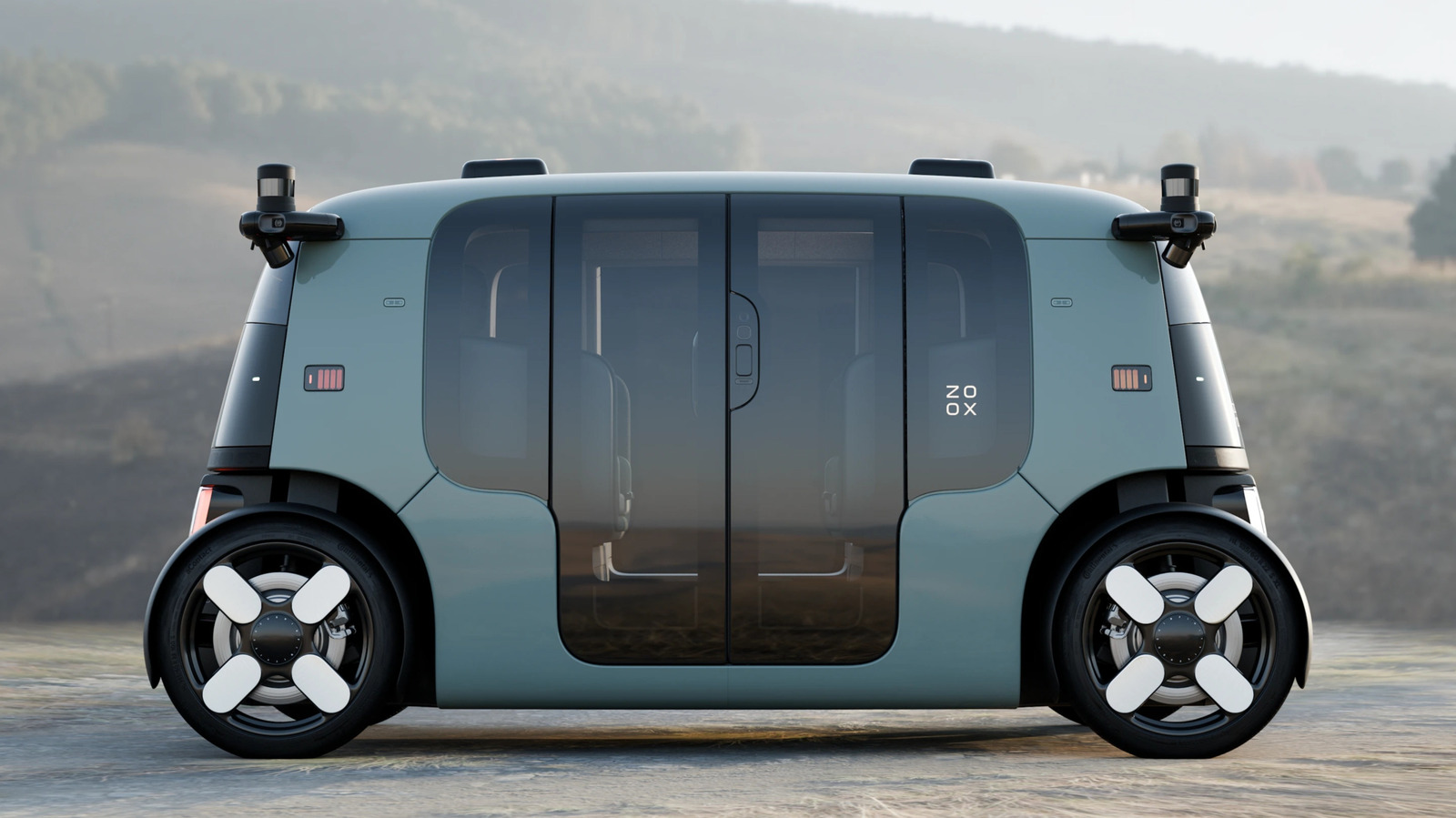
Zoox's recall of 105 robotaxis for failing to navigate smoke might sound alarming, but it reveals something encouraging: the autonomous vehicle industry is finally being honest about its limitations and treating safety gaps like the serious engineering problems they are.
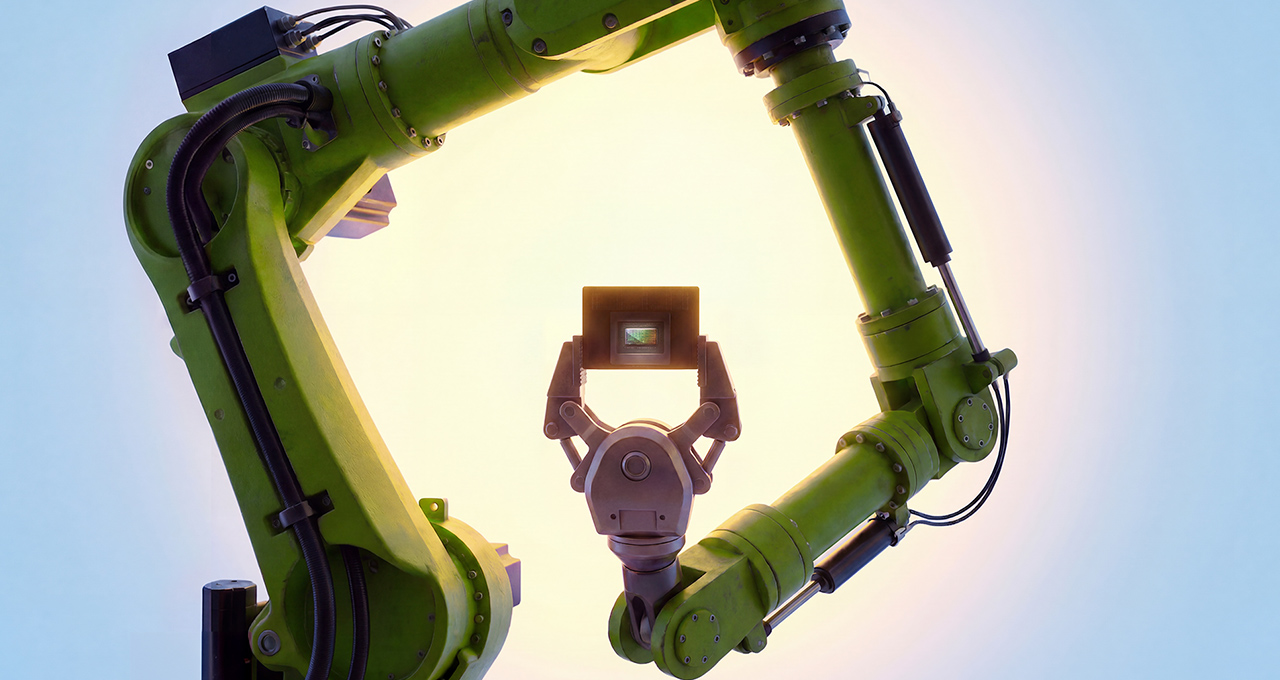
NVIDIA introduced the Jetson T3000 and T2000 modules based on its Thor architecture to enable mass-market robotics and edge AI deployment. The T3000 delivers 865 FP4 teraflops with a compact form factor and functional safety capabilities, while the T2000 provides an entry-level option with 400 teraflops for visual AI agents and autonomous systems. NVIDIA also released AI agent skills that automate memory optimization, helping companies like Agile Robots and Hitachi reduce memory usage by up to 15GB while maintaining performance.
Agility Robotics CEO Peggy Johnson outlined six policy recommendations for the U.S. government to strengthen the humanoid robotics industry, including building domestic component manufacturing capacity, developing a coordinated national strategy, establishing industry-led safety standards, supporting workforce development, and lowering adoption barriers for small manufacturers. Johnson emphasized the need for deliberate action to maintain technological leadership against international competition, particularly from China.
Carnegie Mellon University, Carnegie Foundry, and leading U.S. drone manufacturers have launched the Autonomous Systems Manufacturing Platform (ASMP), leveraging over $50 million in CMU investments to strengthen America's drone manufacturing base. The initiative brings together CMU's National Robotics Engineering Center with industry partners to advance autonomous systems manufacturing capabilities.
This article discusses the critical role of power management and energy conversion in humanoid robot design, featuring an interview with Murata Power Solutions about how onboard power sources and battery technology are fundamental limiting factors in robotic performance and mobility. The piece highlights that as humanoid robots advance in speed, dexterity, and vision capabilities, efficient power delivery systems have become essential to converting available energy into the mechatronic and computational systems that drive these machines.
The article discusses enterprise strategies for managing AI investments during the shift toward agentic AI systems, emphasizing metrics like useful work per dollar, operational efficiency improvements, and scaling of high-value workflows. It focuses on how organizations can optimize returns on their AI investments in this emerging era of autonomous AI agents.
MIT engineers have developed an ultrasound wristband that uses AI to track hand movements in real-time by imaging wrist muscles and tendons, enabling wireless control of robotic hands and virtual objects. The technology can translate a wearer's gestures to a robot that mimics their movements, with potential applications in training humanoid robots for dexterous tasks like surgery and interaction in virtual/augmented reality environments.
General Intuition, a Bezos-backed startup valued at $2.3 billion, just raised $320 million to develop world models trained on video game data for physical AI applications. The startup's CEO argues that gaming data may better enable AI systems to understand spatial reasoning and physical dynamics compared to text-based large language models, potentially advancing toward artificial general intelligence.

Google announced Video Remix, a new AI feature powered by Gemini Omni that allows Google Photos users to edit and transform videos using natural language prompts. The feature, available to Google AI Plus, Pro, and Ultra subscribers, can apply filters, adjust lighting, change backgrounds, and perform other video editing tasks in seconds without manual editing.
General Intuition, a Bezos-backed startup valued at $2.3 billion, closed a $320 million funding round to develop world models trained on gaming data for physical AI and AGI. The company believes gaming data can help AI systems better understand spatial and temporal reasoning, addressing limitations of current large language models, and is also building Nerve, a marketplace connecting gamers to data labeling and teleoperations work.
DeepSeek, a Chinese AI company, is reportedly developing its own inference chips to reduce reliance on third-party providers like NVIDIA and Huawei. The company is hiring engineers and engaging with manufacturing partners as part of its expansion strategy in the competitive Chinese AI market.

This academic perspective from UC Berkeley researchers explores how rapidly decreasing AI inference costs (down 50-900x per year) are reshaping data systems design. The article outlines three key challenges: designing data systems for agent queries, managing state and coordination across agent swarms, and verifying data systems synthesized by agents themselves.

Open AI models and infrastructure have become foundational to modern AI research, as evidenced by thousands of papers at ICML 2026 citing open models like NVIDIA Nemotron, Cosmos, and Isaac GR00T. Key research areas include robot world models (such as DreamDojo for learning physical reasoning), AI for life sciences, synthetic data generation, and autonomous vehicle development, with companies like Sakana AI and Merck leveraging these open foundations for their work.
Quarterhill Inc., an intelligent transportation systems company, discusses how AI platforms and smart infrastructure are modernizing U.S. highways as autonomous vehicle deployment accelerates. The article examines challenges in managing autonomous freight fleets, including infrastructure planning, traffic management, and the need for coordination between technology developers and public agencies overseeing highway networks.
This roundup covers June 2026's top 10 robotics developments, including NVIDIA's physical AI tools, AGIBOT's 15,000th robot production milestone, humanoid deployments by Figure at BMW, major funding rounds for Standard Bots ($200M), NEURA Robotics ($1.4B), and General Intuition ($320M), Agility Robotics' SPAC merger announcement, RealSense's new AI-native depth camera, and Collaborative Robotics' Proxie Gen 2 mobile manipulation robot.

Google has launched Gemini Spark, an agentic AI assistant, to its Gemini macOS app, allowing users to automate tasks like organizing files, creating spreadsheets, and managing workspace documents. The feature is currently in beta and exclusively available to Google AI Ultra subscribers ($100/month) in the US, with planned integrations with third-party apps and cross-device task execution coming in the future.

Netflix partnered with ElevenLabs to create an AI-generated recreation of Gene Wilder's voice for a new reality competition show inspired by Charlie and the Chocolate Factory, with approval from Wilder's estate and widow. The AI voice narrates the show's trailer, recreating Wilder's iconic Willy Wonka performance, though critics question the decision to use AI recreation rather than hire a new actor for the role.

While Western companies continue refining prototypes, Chinese robotics firm AGIBOT has already shipped 15,000 humanoid robots and captured 39% of the global market. The gap between demonstration and deployment is widening, and it's not in Silicon Valley's favor.
Researchers at the University of Barcelona have developed CIGaRS, an AI-powered framework that uses machine learning to analyze Type Ia supernovae and measure cosmic distances with unprecedented accuracy. The technique relies primarily on imaging data rather than expensive spectroscopy and is designed to leverage massive datasets from next-generation observatories like the Vera C. Rubin Observatory to improve understanding of dark energy and cosmic expansion.
MBody AI, a Las Vegas-based company developing an operating system for enterprise service robots, is expanding its North American operations across eleven states and into Canada, with its hardware-agnostic Orchestrator platform managing multi-robot fleets for hospitality, gaming, and other industries. The company, founded in 2024, is preparing to go public through a merger with Check-Cap Ltd. and capitalizes on the growing service robotics market, projected to reach $29 billion by 2031 in North America.

Google reportedly capped Meta's use of its Gemini AI model after Meta exceeded computing capacity limits, revealing that even tech giants struggle with insufficient computational resources for AI workloads. Meta, which lacks its own cloud business, is rapidly expanding data center investments and has turned to managing token usage more efficiently, while also using competing models like Anthropic's Claude for coding, content moderation, and customer service applications.
AGIBOT has produced its 15,000th robot, marking significant progress in scaling embodied AI systems from prototype to real-world industrial deployment. The Shanghai-based company demonstrated accelerating production timelines and is now ranked first globally in humanoid robot shipments with a 39% market share in 2025, with the AGIBOT G2 showing validation through factory trials performing quality inspections alongside workers.

Agility Robotics' $2.5 billion SPAC merger signals a concerning trend in the humanoid robotics sector. As venture capital chases flashy bipedal machines, the real automation revolution is happening quietly in unglamorous industrial applications.