

Airports and Warehouses Are Becoming Robotics' Proving Ground
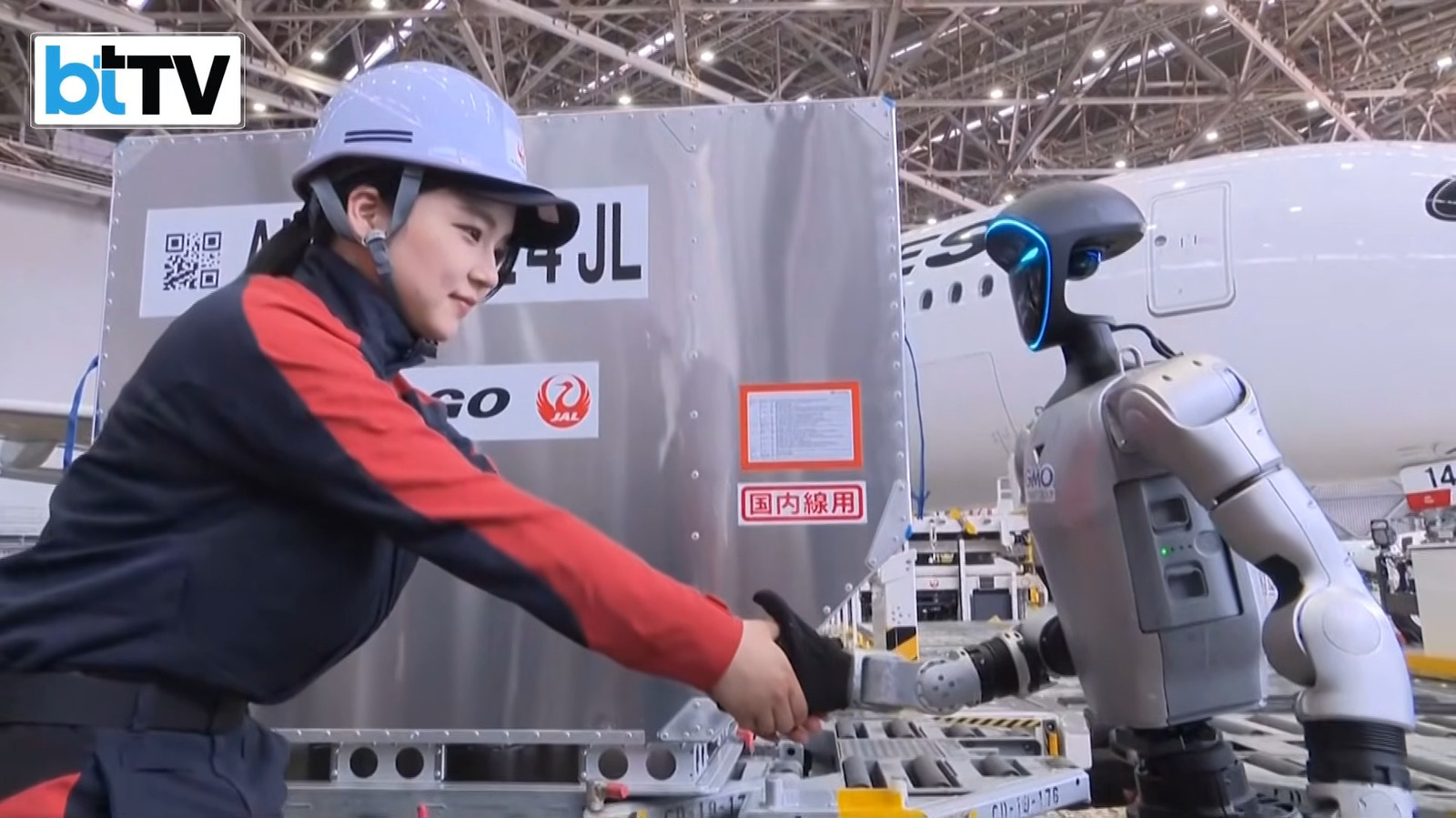
There's a pattern emerging in robotics news that nobody seems to be talking about: the industry's most significant deployments aren't happening on factory floors or in research labs. They're happening in airports, warehouses, and on highways.
Consider the recent announcements. Japan Airlines is deploying humanoid robots at Tokyo's Haneda Airport for baggage handling. California just greenlit autonomous trucks for statewide operation. Schaeffler committed to deploying 1,000 humanoid robots by 2032, and Locus Robotics is expanding its autonomous fulfillment systems. FAULHABER released a drive system specifically designed for autonomous logistics in tight spaces.
What connects all of these? They're solving the same fundamental problem: moving physical objects through complex, semi-structured environments where labor is expensive, scarce, or both.
This isn't coincidental. Logistics represents the sweet spot for current robotics technology. Unlike manufacturing, which often requires extreme precision and flexibility, or household tasks that demand infinite adaptability, logistics operations have just enough structure to be automatable and just enough variability to justify the investment in advanced systems.
The economics are compelling. A baggage handler at a major airport might process hundreds of bags per shift in a physically demanding job with high turnover. An autonomous truck can operate nearly continuously on well-mapped highways. A warehouse robot can work multiple shifts without breaks in environments specifically designed around predictable workflows.
But here's what makes this trend significant beyond the obvious cost savings: logistics is becoming the training ground for more ambitious robotics applications. When Japan Airlines puts humanoids on the tarmac at Haneda, they're not just automating baggage handling—they're generating real-world data about how bipedal robots perform in unpredictable outdoor environments with human workers, weather conditions, and tight operational constraints.
The same applies to autonomous trucks on California roads. Every mile driven teaches these systems about edge cases, from unexpected construction zones to erratic human drivers. This is data that can't be generated in simulation or controlled testing environments.
What's particularly interesting is how this inverts the traditional robotics development model. For decades, the assumption was that robots would master controlled industrial environments first, then gradually expand into messier real-world applications. Instead, we're seeing logistics—which sits somewhere between the factory floor and the open world—emerge as the crucial middle step.
The implications extend beyond robotics companies. Logistics infrastructure is being redesigned around autonomous systems in ways that will be difficult to reverse. Warehouses are being built with ceiling-mounted navigation systems. Airports are adding robot-friendly pathways. Highway regulations are being rewritten to accommodate autonomous vehicles.
This creates a flywheel effect: better infrastructure enables more capable robots, which justify further infrastructure investment, which attracts more robotics deployment. The question isn't whether logistics will be heavily automated—that's already happening. The question is what comes after, once the industry has spent a decade refining robots in these semi-structured environments.
If history is any guide, the technologies proven in warehouses and airports will eventually migrate to more complex applications. The computer vision systems learning to navigate airport terminals will inform household robots. The manipulation algorithms perfecting baggage handling will enable more dexterous manufacturing tasks.
For now, though, the revolution is happening in places most people only pass through on their way to somewhere else. And that might be exactly where it needs to happen.