
Edge Computing Is Eating the Robot
There's a pattern emerging in robotics that has nothing to do with how robots move and everything to do with where they think.
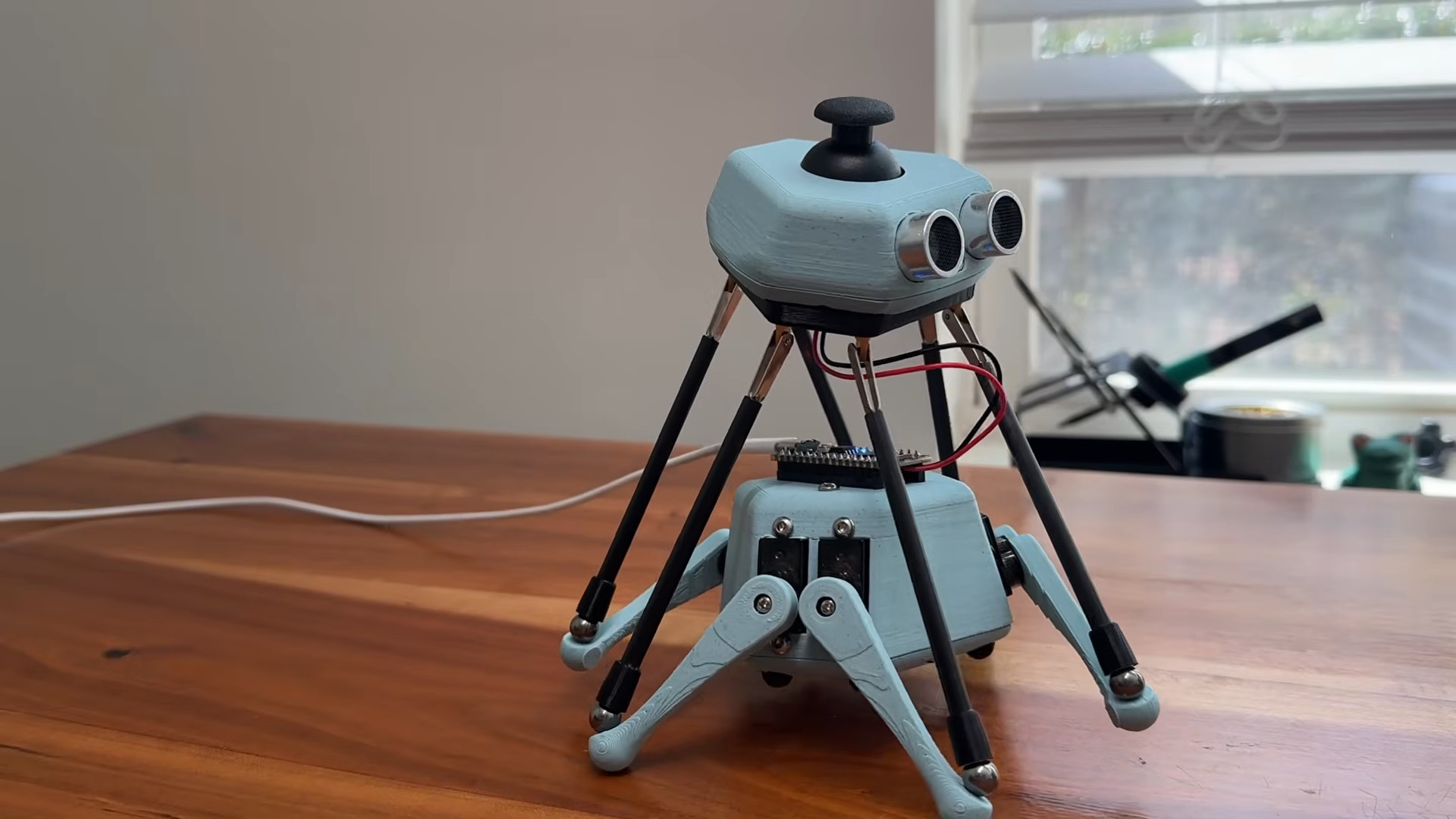
Consider the recent partnership between Avnet and Weston Robot, which embedded AMD Ryzen AI processors directly into quadruped inspection robots. Or igus's new twisterchain system designed specifically to handle the cable demands of compact robots with sophisticated onboard processing. Or even TongDou, a hobbyist's desktop robot equipped with a 24 GHz radar—the kind of sensor that would have been unthinkable in a sub-$100 platform just a few years ago.
What connects these seemingly disparate developments is edge intelligence: the migration of AI processing from distant data centers to the robots themselves. And while the industry has been talking about edge computing for years, we're now seeing it fundamentally reshape what robots can do and who can deploy them.
The economics are particularly revealing. OSARO's CEO recently emphasized hardware-agnostic vision systems that process at the edge—a direct response to the reality that cloud-dependent robots become cost-prohibitive at scale. When every decision requires a round trip to a server farm, latency isn't just a technical problem; it's a business model killer. Edge processing turns what would be a recurring operational expense into a one-time capital cost.
But the more profound shift is in capability. Autonomous Solutions Inc. points out that advanced perception systems are now the bottleneck in industrial autonomy. That's only solvable with local processing power sufficient to run sophisticated vision models in real time. You can't inspect a pipeline or navigate a warehouse floor if you're waiting for the cloud to wake up.
The hobbyist community grasps this instinctively. The creator of TongDou didn't embed radar for novelty—radar sensors provide data too high-bandwidth and time-sensitive for cloud processing. The robot's ESP32-S3 microcontroller processes everything locally because that's the only architecture that makes sense.
Even the infrastructure plays supporting roles. That new robotics lab at the University of Florida focusing on industrialized construction? It's tackling environments where reliable connectivity is fantasy. Moove's autonomous vehicle 'Nests' are essentially edge computing facilities on wheels, handling charging, servicing, and fleet orchestration without constant cloud dependency.
The irony is that this decentralization is happening just as AI models are becoming more powerful and more cloud-centric in other domains. While OpenAI pursues ever-larger language models requiring massive server farms, robotics is moving in the opposite direction: smaller, more efficient models running on silicon you can hold in your hand.
This divergence matters because it reveals a fundamental truth about embodied AI: the physical world doesn't wait for your API call to return. When a robot needs to make a decision—whether it's a quadruped adjusting its gait on uneven terrain or a warehouse bot identifying a package—milliseconds matter in ways they simply don't for text generation.
The edge computing wave in robotics isn't just making robots faster or cheaper. It's making them autonomous in the truest sense: capable of independent operation in environments where connectivity is unreliable, latency is unacceptable, and the stakes are too high to depend on someone else's infrastructure.
The robots are finally getting their own brains. And they're keeping them close.