
Five Fingers, Twenty Joints, One Bizarre Breakthrough
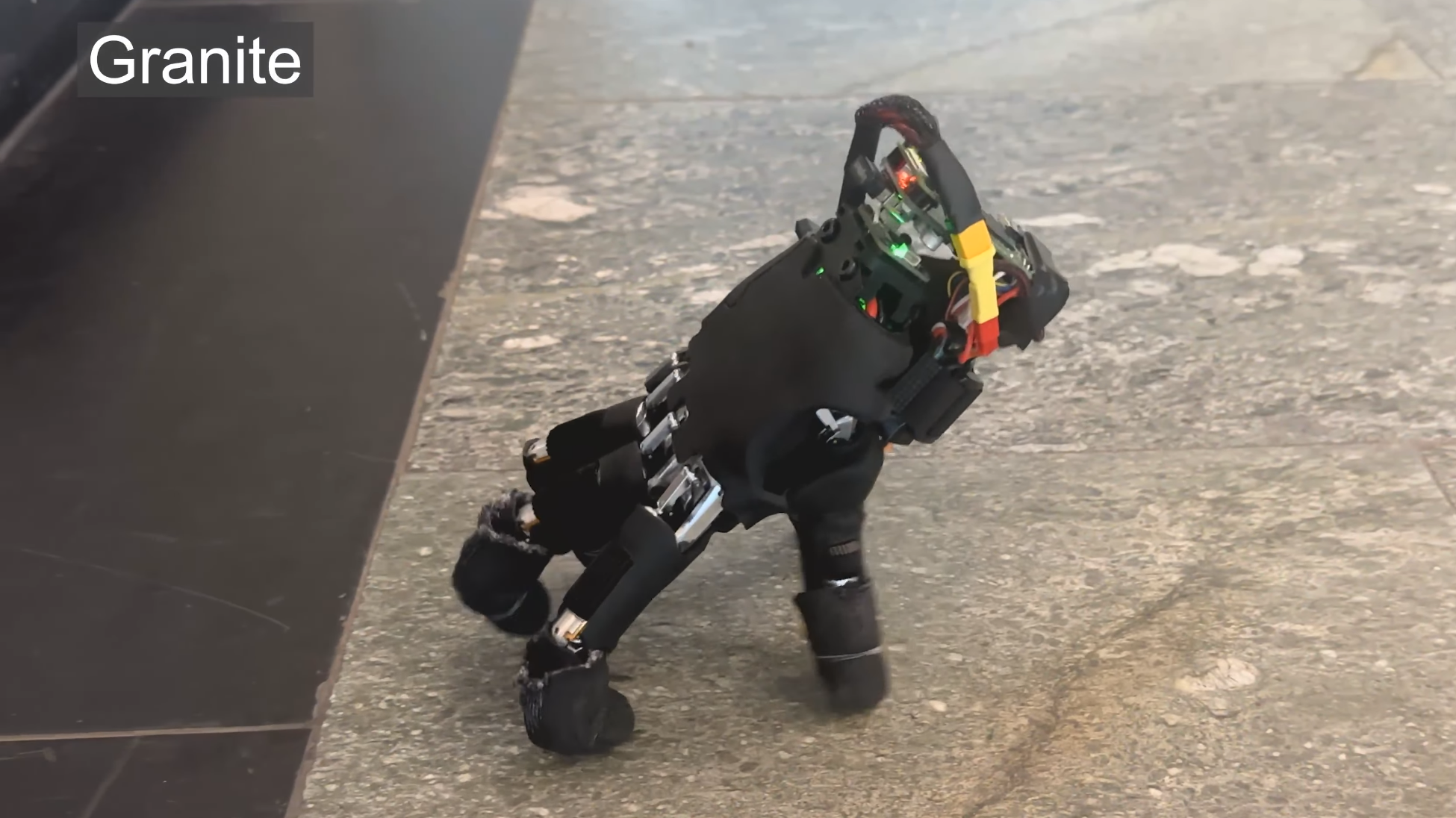
There's a robotic hand at ETH Zurich that can walk. Not attached to an arm. Not part of a humanoid body. Just a hand, equipped with a Raspberry Pi, stumbling across varied terrain like a determined spider that lost a argument with evolution.
It's the kind of project that makes you do a double-take. In a month dominated by announcements about GPT-6 Astra's business capabilities, Gemini's extended thinking, and OpenAI's enterprise partnerships, a walking hand feels almost absurdly niche. But that's precisely what makes it significant.
The robotics industry has developed a predictable rhythm: humanoid announcements, warehouse automation updates, AI model integrations, repeat. We've become conditioned to expect robotics progress to look like incremental improvements toward human-shaped machines doing human-shaped tasks. A hand that walks violates that expectation entirely—and in doing so, reveals something important about where genuine innovation actually happens.
The ETH Zurich team used reinforcement learning to control twenty joints, trained their system in simulation, and achieved something genuinely novel: a morphology that has no natural analogue successfully navigating three-dimensional space. This isn't biomimicry. It's not even particularly practical. But it demonstrates motor control principles that could transfer to everything from rescue robots squeezing through rubble to inspection systems navigating confined industrial spaces.
Contrast this with the week's other major developments. Perplexity and Cognition announced they're deploying Astra for autonomous system management and code testing—both impressive integrations that represent real capability gains. But they're also predictable extensions of existing trajectories. Everyone saw AI-assisted software engineering coming. Nobody predicted a hand that walks across a keyboard.
This matters because the robotics field is increasingly bifurcating into two streams: commercial applications racing toward market deployment, and research exploring morphological possibilities. The commercial stream gets the funding, the press releases, and the quarterly targets. The research stream gets the weird questions—and sometimes, the breakthroughs nobody knew to look for.
Consider what happened when Boston Dynamics spent years making robots dance and do parkour while competitors focused on practical warehouse applications. The entertainment value drew criticism, but those dynamics experiments led to control systems that now enable Atlas to perform complex manipulation tasks. The "impractical" research created the foundation for practical applications.
The walking hand sits in that same category of research that looks like a curiosity until suddenly it isn't. Princeton's recent work on motorless origami robots using magnetic control, mentioned in this month's robotics digest, shares similar DNA—unconventional approaches to locomotion that sidestep traditional assumptions about how robots should move.
What makes these projects valuable isn't their immediate commercial viability. It's that they force researchers to solve problems without relying on human-shaped solutions. A hand walking requires rethinking balance, gait, and spatial navigation from first principles. Those principles, once understood, become tools applicable far beyond the initial bizarre demonstration.
The industry needs both streams. We need Perplexity trusting Astra with production systems and companies building practical humanoids for manufacturing floors. But we also need researchers in Swiss labs teaching hands to walk, because the path from "that's weird" to "that's transformative" is shorter than it appears.
Sometimes the most important question isn't "what can we build that's useful?" but "what can we build that shouldn't work—and what do we learn when it does?"