

Garage Roboticists Are Quietly Outpacing the Billion-Dollar Labs
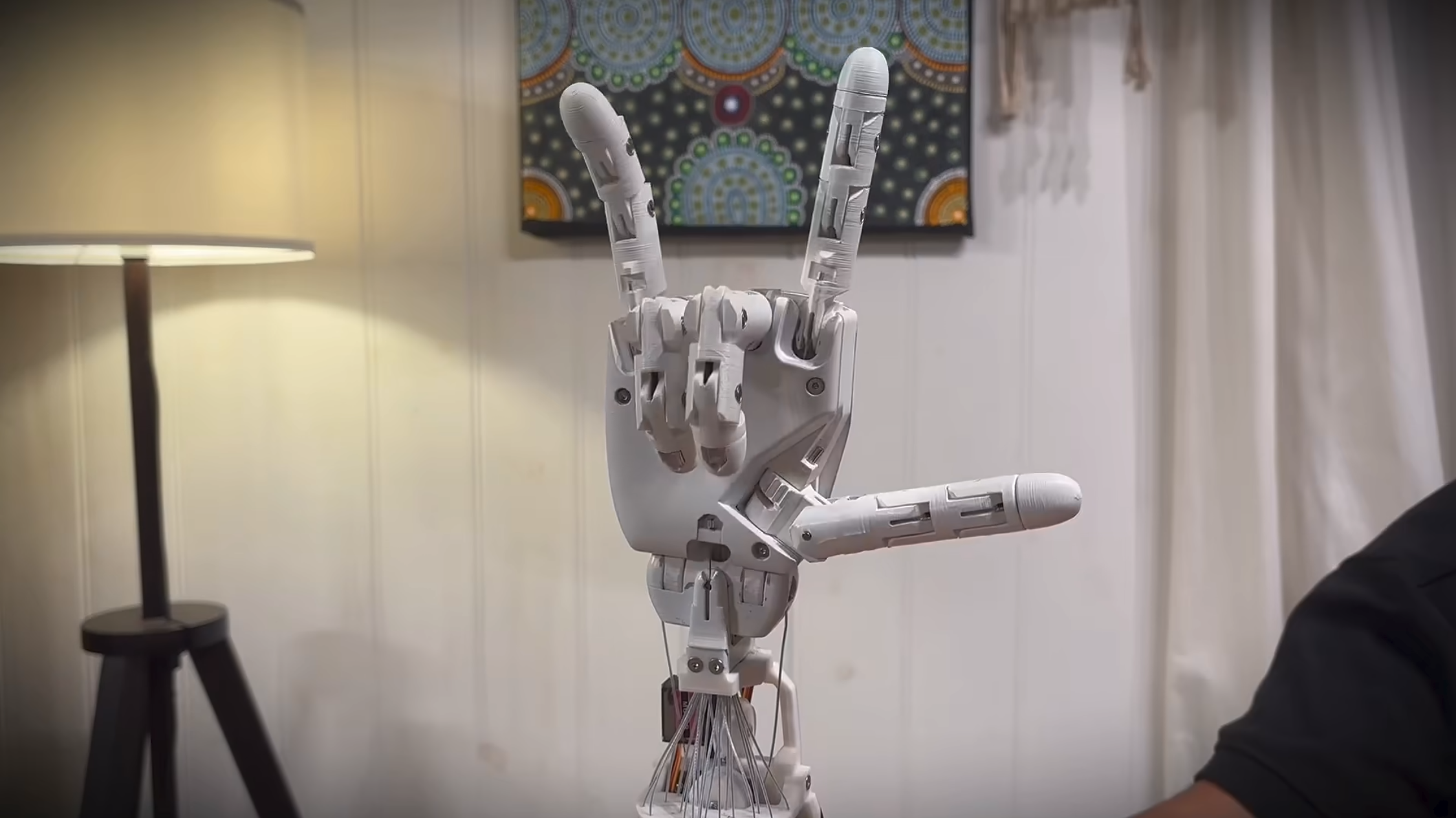
This week's robotics news cycle was dominated, as usual, by the usual suspects — massive language models, AI agents behaving badly, chip design automation. But buried among the headlines were three quieter stories that deserve more attention than they're getting: a maker who built a full set of twelve custom robot actuators from scratch, a university team that set a land speed record for soft robots using pneumatic logic instead of microcontrollers, and a hobbyist who built an 18-degree-of-freedom robotic hand for under $300.
None of these projects will make it into a venture capital pitch deck. None of them involve a foundation model or a humanoid demo reel. But together they point to something the industry's biggest players would do well to notice: real hardware innovation is increasingly happening outside the companies with the biggest budgets.
Take the DIY actuator project from Koshiro Robot. Actuators are arguably the most expensive and proprietary component in any robot — the reason humanoid robot companies guard their joint designs so closely and why supply chain bottlenecks for harmonic drives and torque sensors have slowed entire product lines. A maker designing twelve complete actuators, drivers, and field-oriented control firmware from scratch, prioritizing ease of assembly over miniaturization, is effectively open-sourcing a piece of the supply chain that companies like Figure, Tesla, and Unitree treat as a trade secret.
The UC San Diego soft robotics team's achievement is even more conceptually interesting. By using pneumatic logic gates instead of a microcontroller to drive movement, they sidestepped one of the fundamental bottlenecks in soft robotics: the lag between sensing and actuation that comes from routing everything through a digital brain. It's a reminder that not every robotics problem is solved by adding more compute — sometimes the answer is better mechanical design.
And the budget robotic hand is maybe the most quietly subversive of the three. Robotic hands remain one of the hardest unsolved problems in the field — Boston Dynamics, Tesla, and a dozen humanoid startups have poured enormous resources into dexterous manipulation. A hobbyist achieving 18 degrees of freedom with steel rope tendons routed through joint centers, for a few hundred dollars, isn't going to out-engineer Optimus. But it does prove that the barrier to experimentation has collapsed, and that matters for who gets to participate in solving these problems.
There's a pattern worth naming here. As AI companies consolidate power over software — OpenAI, Google DeepMind, and a handful of others now effectively control the infrastructure layer for AI reasoning — hardware is moving in the opposite direction. 3D printing, cheap servos, open-source firmware, and shared design files are lowering the cost of entry for physical robotics faster than the cost of frontier AI models is rising.
That divergence has real implications. If the next useful robotics breakthrough is as likely to come from a hobbyist's workbench as from a well-funded lab, then the industry's obsession with scale — bigger funding rounds, bigger humanoid fleets, bigger benchmarks — may be measuring the wrong thing entirely. Sometimes the most important innovation isn't the one with a billion-dollar valuation. It's the one anyone can replicate in their garage.