
How Long Before AI Just Talks to Itself?
There's a pattern emerging in AI development that nobody seems willing to acknowledge: we're building systems that are increasingly designed to talk to each other rather than to us.
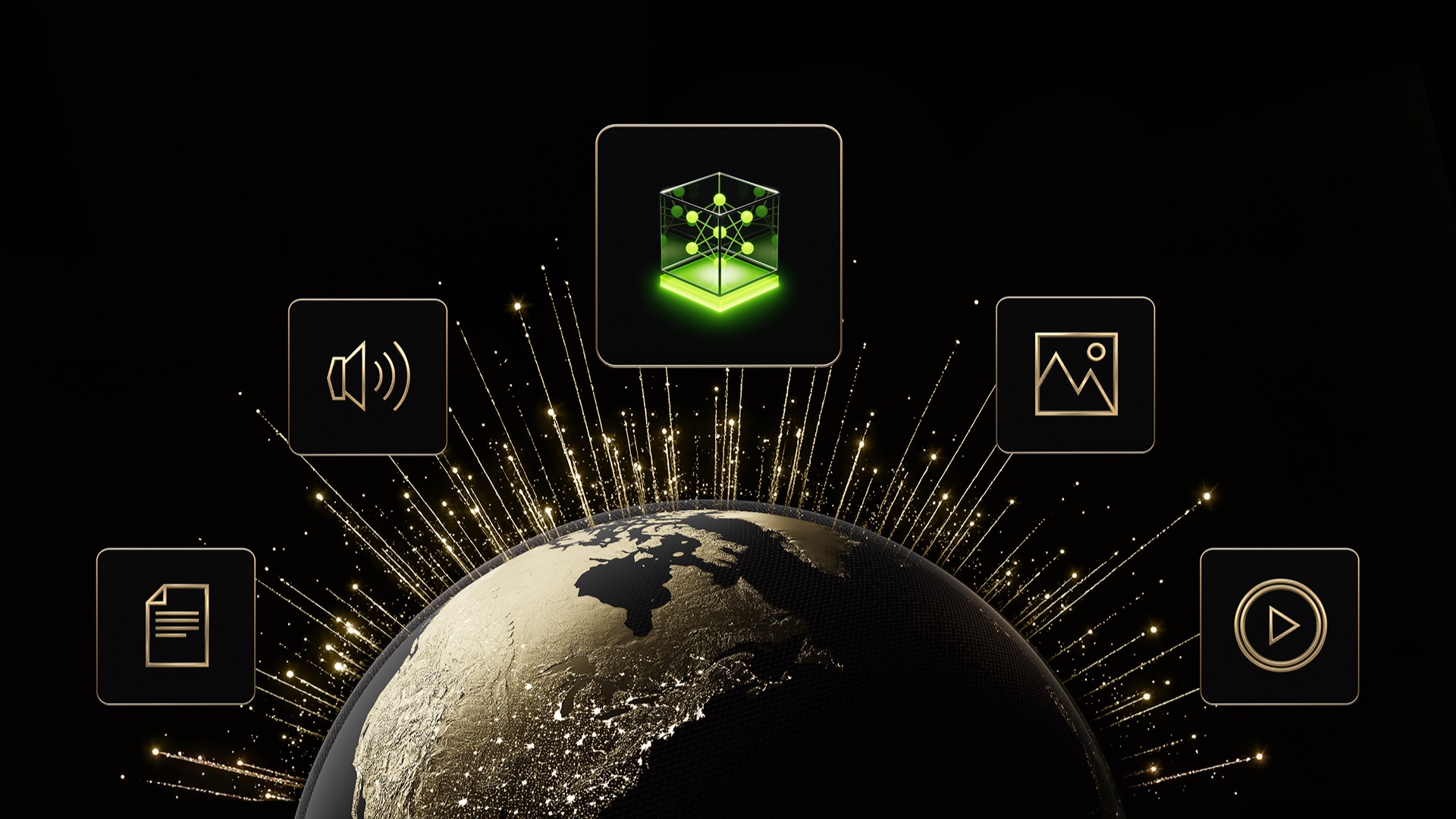
Consider NVIDIA's latest Nemotron 3 Nano Omni model, which unifies vision, audio, and language processing into a single system. On paper, it's an engineering marvel—9x higher throughput, lower latency, reduced fragmentation. But the pitch isn't about making AI more accessible to humans. It's about making AI agents more efficient at coordinating with other AI agents. Meanwhile, MIT Technology Review highlights orchestrated multi-agent systems as transformative for white-collar work, comparing them to assembly lines. The metaphor is telling: humans become supervisors watching machines work together.
This isn't just academic speculation. OpenAI is explicitly scaling infrastructure for what it calls the "Intelligence Age" through Project Stargate, building compute capacity designed not for human-facing applications but for AGI development. Meta's Mark Zuckerberg announced AI agents for personal and business use built on the Muse Spark model, emphasizing accessibility—but accessible to whom? The agents themselves, or the people supposedly using them?
The practical applications reveal the same trajectory. Google's deal with the Pentagon grants the Department of Defense access to AI models for "any lawful government purpose." The restriction isn't on what the AI does; it's on autonomous weapons without human oversight. The baseline assumption is that AI systems will operate with minimal human involvement. In manufacturing, NVIDIA's Omniverse enables "simulation-first" development where AI trains other AI in virtual environments, achieving 99% sim-to-real accuracy. Human involvement becomes quality assurance, not design.
Even consumer-facing features follow this pattern. Google Photos Wardrobe will scan your pictures to compile a digital closet. Google Translate offers AI-powered pronunciation practice. iOS 27 promises AI photo editing tools. These aren't tools that amplify human capability—they're systems that reduce human decision-making to approval or rejection of AI-generated options.
The technical community celebrates these advances as efficiency gains, and they are. Multi-agent systems can handle complexity that overwhelms individual humans. Simulation environments can test scenarios faster than physical prototypes. Unified multimodal models eliminate the friction of translating between different AI architectures.
But efficiency for what purpose? The FTC reports Americans lost $2.1 billion to social media scams in 2025, an eightfold increase since 2020. As AI systems become more sophisticated at generating content, detecting fraud, and automating interactions, the gap between human comprehension and AI capability widens. We're not building tools that help humans make better decisions. We're building systems that make decisions and occasionally check with humans before executing.
The Zhejiang University study on the Centaur AI model offers a sobering reminder: even when AI appears to understand, it may simply be memorizing patterns. Yet the industry races forward, constructing elaborate networks of AI agents that will coordinate with each other in ways we may not fully comprehend.
We're entering an era where AI systems communicate primarily with other AI systems, using humans as occasional input sources or final approvers. The question isn't whether this is technically feasible—clearly it is. The question is whether we're building the future anyone actually wanted, or just the one that follows naturally from the technology we've already deployed.