
Open Source Robotics Just Went From Hobby Project to Existential Threat
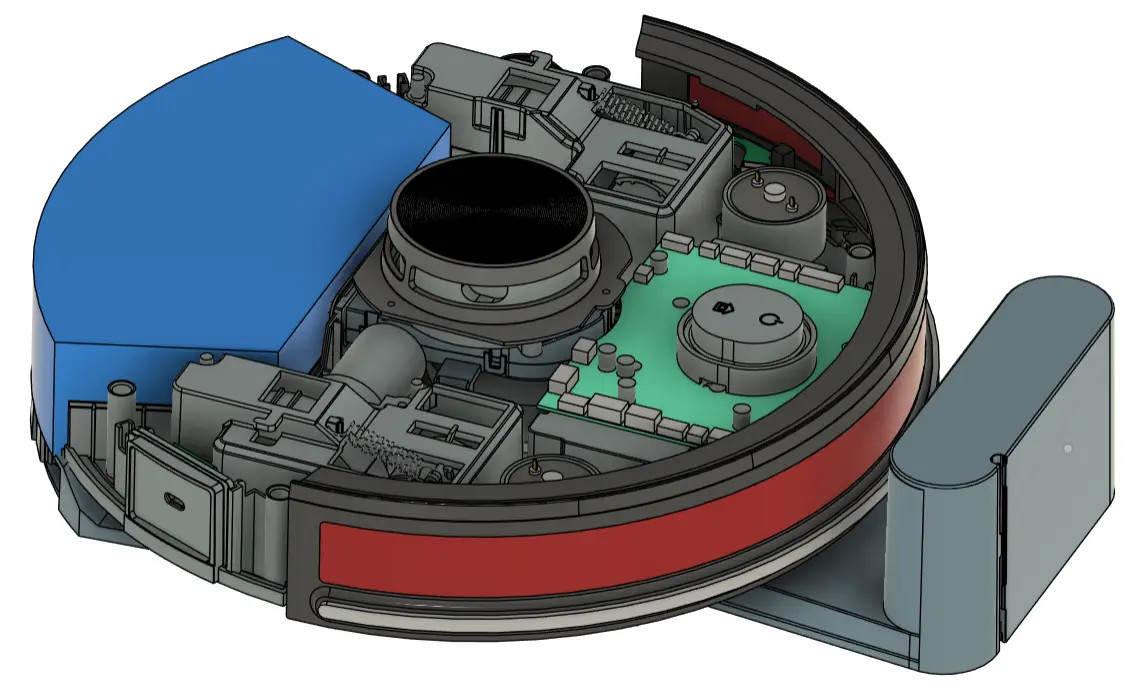
There's something almost quaint about OOMWOO, the open-source robotic vacuum that runs on a Raspberry Pi and 2D lidar without touching the cloud. It requires 3D printing. It's still in development. It's exactly the kind of project that industry veterans would dismiss as a weekend tinkerer's curiosity.
Except that dismissal is getting harder to justify every month.
While Travis Kalanick raises $1.7 billion for ATOMS and Humanoid commands a $1.35 billion valuation before shipping a single commercial robot, the open source robotics community is quietly solving the same problems with a fraction of the resources. OOMWOO's creator isn't trying to build a unicorn — they're building a vacuum that works without sending your floor plan to AWS.
This matters more than it seems. The robotics industry is currently structured around a familiar playbook: raise massive venture rounds, build proprietary hardware and software stacks, lock customers into ecosystems, and pray you reach scale before the capital runs out. Vicarious Surgical just demonstrated what happens when that prayer goes unanswered, shutting down after burning through $300 million.
Meanwhile, open source projects operate on a fundamentally different model. They're collaborative, iterative, and crucially — they don't need to generate venture-scale returns. A robot vacuum that costs $200 in parts and runs on open software doesn't need to justify a billion-dollar valuation. It just needs to work.
The timing of this divergence is notable. Just as foundation models like Generalist's GEN-1 are demonstrating that AI can generalize across different robot embodiments, open source frameworks like ROS 2 are maturing into production-ready platforms. The barriers to entry are collapsing on both the hardware and software sides.
Consider what's actually required to build a capable robot in 2025: affordable sensors, accessible compute platforms, and robust AI models. Every single component is more available and cheaper than it was five years ago. The Raspberry Pi running OOMWOO has more processing power than the computers that guided Apollo missions. The software frameworks are free and well-documented. The AI models are increasingly open-weight or API-accessible.
The proprietary robotics companies will counter that they're solving harder problems — and they are. Holiday Robotics' FRIDAY features 64 degrees of freedom. Generative Bionics is building full-body tactile sensing. AMD is developing specialized silicon for deterministic real-time control. These are genuine technical achievements that require serious capital.
But here's the uncomfortable question: how much of that sophistication does the average use case actually need? Most robotic applications don't require 64 degrees of freedom. They need reliability, affordability, and the ability to repair and modify systems without voiding warranties or losing vendor support.
The open source approach excels at exactly these practical concerns. When your robot vacuum breaks, you can fix it. When you want to modify its behavior, you can. When the original creator loses interest, the community can fork the project and continue development. Try doing any of that with a proprietary platform.
We've seen this movie before in software. Twenty years ago, proprietary Unix systems dominated enterprise computing. Today, Linux runs everything from smartphones to supercomputers. The transition wasn't immediate, and commercial vendors didn't disappear — but the existence of a robust open alternative fundamentally changed the economics and power dynamics of the industry.
Robotics is approaching a similar inflection point. The question isn't whether open source robots will replace commercial ones — they won't, at least not entirely. The question is whether the robotics industry is prepared for a world where the baseline expectation is openness, interoperability, and user control.
Based on current funding patterns and business models, the answer appears to be no. And that's going to be a problem.