

Regulators Finally Realized Self-Driving Cars Are Someone Else's Problem
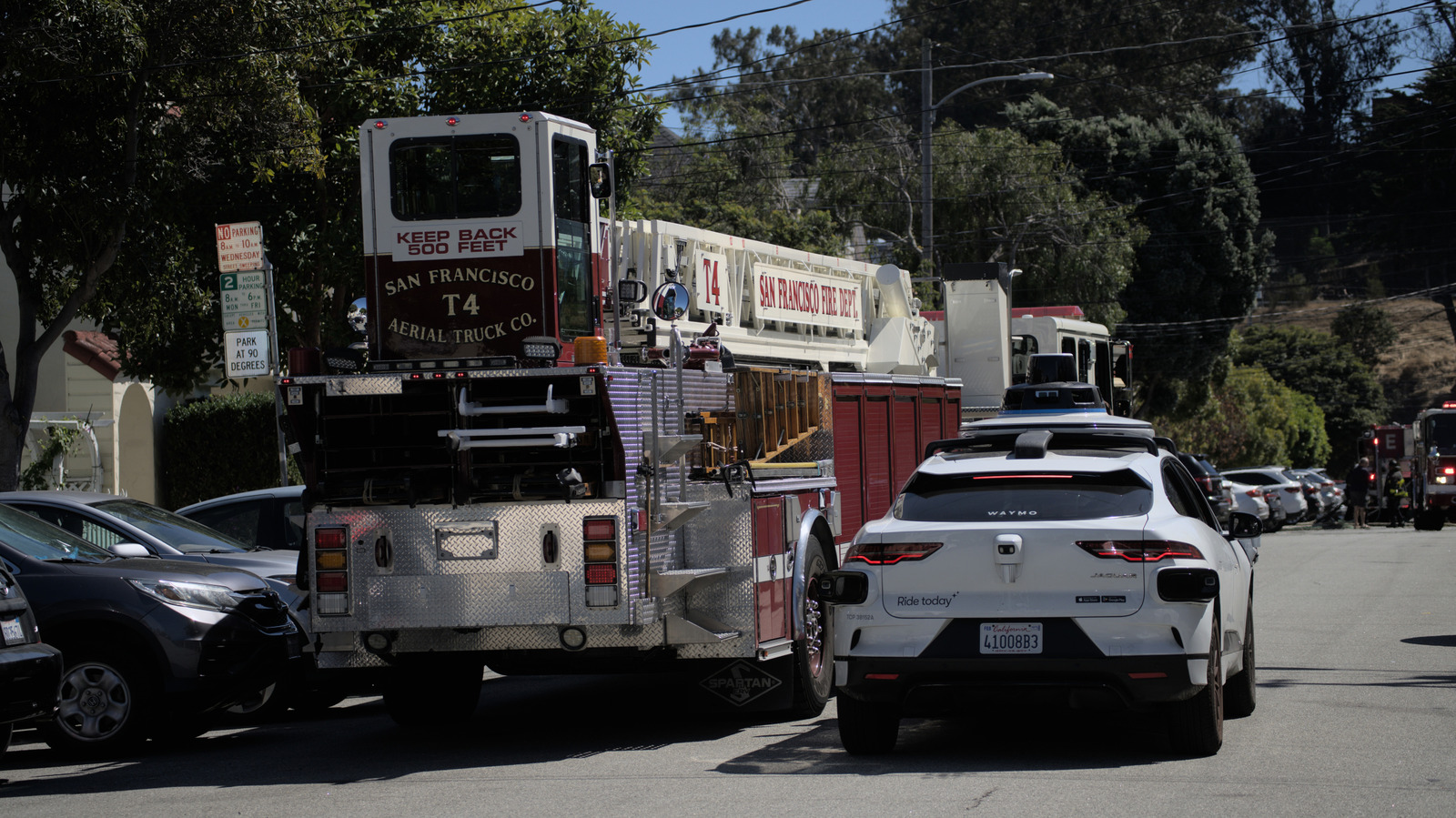
The National Highway Traffic Safety Administration just issued what might be the most obvious regulatory demand in autonomous vehicle history: stop blocking ambulances and fire trucks. According to recent reports, the NHTSA has documented a pattern of self-driving cars interfering with emergency first responders, giving AV developers until the end of July to address the issue.
What's remarkable isn't that this problem exists—it's that it took this long for regulators to formally acknowledge it. While the autonomous vehicle industry has spent years perfecting lane changes, optimizing routing algorithms, and debugging edge cases in normal traffic scenarios, they apparently overlooked a crucial question: what happens when your robot car encounters a situation where the rules of the road temporarily cease to apply?
Emergency response scenarios represent a fundamental challenge that goes beyond sensor fusion or path planning. When a fire truck races toward a burning building or an ambulance rushes to a cardiac arrest, human drivers don't just move aside—they make split-second contextual decisions about where to go, often driving onto sidewalks, into opposing lanes, or through intersections against lights. They understand the implicit social contract: normal rules are suspended, and getting out of the way takes precedence over everything else.
Current autonomous systems, for all their sophistication, struggle with this kind of context-dependent rule-breaking. They're trained on datasets of legal driving behavior and optimized for safety within established parameters. The very conservatism that makes them cautious in ambiguous situations becomes a liability when decisive, unconventional action is required.
Meanwhile, California's new compliance requirements—as outlined in recent reporting on tickets, geofences, and logging mandates—demonstrate that regulators are finally moving beyond theoretical frameworks to address real-world AV deployment. The problem is that these regulations focus primarily on accountability after incidents occur, not on preventing the kinds of situational awareness failures that lead to blocked emergency vehicles in the first place.
The timing is particularly notable given Waymo's announcement of expansion to four more cities with fully autonomous operations. As robotaxis scale from pilot programs to genuine urban infrastructure, the stakes of getting emergency response interactions wrong multiply exponentially. A single blocked ambulance in a city of millions could mean the difference between life and death for someone who never chose to be part of the autonomous vehicle experiment.
The solution isn't simply better emergency vehicle detection—though that's certainly part of it. It requires a fundamental rethinking of how AVs handle situations where optimal behavior means breaking their own programming. Some researchers have proposed dedicated emergency response modes that give first responders override capabilities. Others suggest vehicle-to-vehicle communication protocols that would allow emergency vehicles to broadcast their presence and intended path directly to nearby autonomous systems.
But these technical solutions sidestep a more uncomfortable question: if autonomous vehicles can't reliably handle a scenario as predictable and well-defined as yielding to emergency vehicles, what does that say about their readiness for the countless other edge cases where context and judgment matter more than algorithms?
The NHTSA's deadline is a start, but it's addressing a symptom rather than the underlying condition. Until autonomous vehicles can understand not just the rules of the road but when and how to break them appropriately, they'll remain sophisticated technological demonstrations rather than reliable replacements for human drivers. Emergency responders shouldn't have to work around robots that can't get out of their way—and the rest of us shouldn't have to wait for them to learn.