
Robotaxis Can't Handle Smoke — And That's Actually Good News
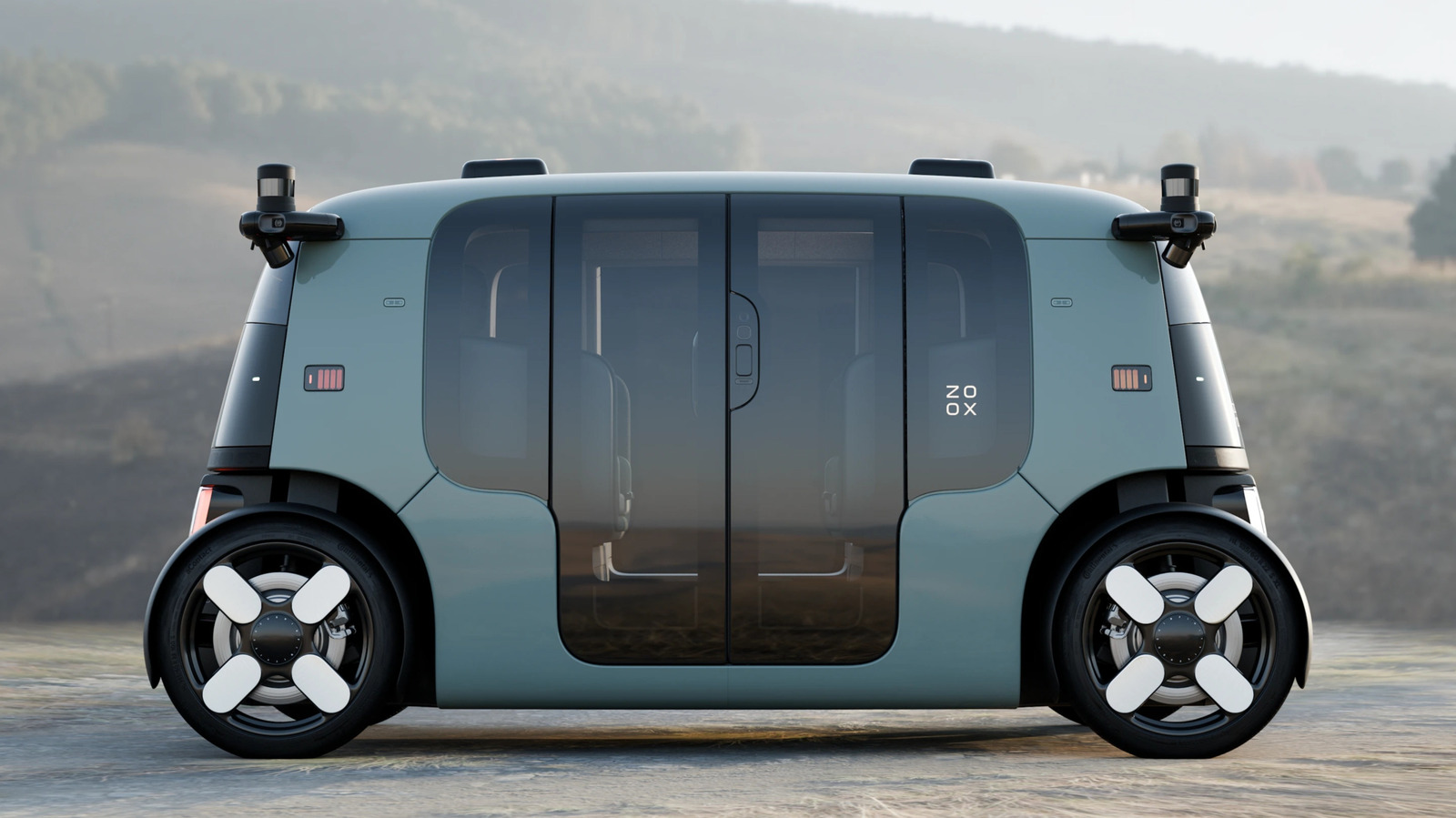
When Zoox announced it was recalling 105 robotaxis because they couldn't safely navigate through heavy smoke, the easy story was about failure. Another setback for autonomous vehicles. More proof that self-driving cars aren't ready. The usual narrative.
But look closer, and this recall tells a much more interesting story — one about an industry that's finally maturing past the hype phase and into genuine engineering discipline.
The incident that triggered the recall happened in June, when a Zoox vehicle interfered with an active fire emergency. Rather than downplaying the gap in their perception systems or issuing vague promises about future updates, Zoox issued a formal software recall. They acknowledged a specific, bounded problem: their autonomous system couldn't reliably detect and respond to heavy smoke conditions.
This matters because smoke is exactly the kind of edge case that early autonomous vehicle boosters loved to handwave away. Five years ago, the pitch was that AI would simply "figure it out" through enough training data and compute power. Smoke, fog, unusual lighting, construction zones — these were presented as minor inconveniences that would solve themselves as the technology matured.
They haven't. And increasingly, that's okay.
What's changed isn't the technology's capabilities — it's the industry's willingness to admit what those capabilities actually are. Zoox didn't try to spin this as a minor bug or blame the fire department. They identified a perception gap, documented it formally, and committed to fixing it through a structured recall process. That's what mature engineering looks like.
Compare this to the broader pattern we're seeing across robotics and AI deployment. Enterprise organizations are shipping AI agents to production while admitting they don't fully trust their own evaluation methods. Construction robotics startups are raising hundreds of millions in funding while their machines can only handle specific, controlled tasks. Even humanoid robot manufacturers are launching products that require constant human supervision.
The difference is that some companies, like Zoox, are being explicit about these limitations. They're treating safety gaps not as embarrassing failures to hide, but as known constraints to document and systematically address.
This represents a fundamental shift in how the autonomous vehicle industry approaches deployment. Instead of the "move fast and break things" mentality that dominated the 2010s, we're seeing companies adopt something closer to aviation's approach to safety: identify failure modes, document them rigorously, and fix them before they become patterns.
The smoke incident is particularly revealing because it highlights how different real-world deployment is from controlled testing. Smoke isn't a rare edge case in urban environments — it happens regularly from fires, construction, protests, even outdoor cooking. Any truly autonomous system needs to handle it reliably. Zoox's willingness to recall vehicles over this issue suggests they understand that "mostly works" isn't the same as "ready for deployment."
This doesn't mean autonomous vehicles are failing. It means they're finally being held to appropriate standards. When an aerospace company discovers a sensor limitation, we don't declare aviation a failure — we expect them to fix it through rigorous engineering. The same standard should apply to robotaxis.
The fact that Zoox is treating a smoke detection gap as recall-worthy rather than dismissible is evidence that autonomous vehicle companies are starting to think like transportation providers rather than tech startups. That's progress, even if it doesn't look like it in the headlines.