
Robotics Innovation Is Quietly Moving Out of the Lab
Scroll through this week's robotics and AI news and you'll notice two very different stories running in parallel. On one track, there's the familiar arms race: GPT-6 variants, Gemini 4 Argon, Live Avatars with lip-syncing in 97 languages, million-token context windows, and enterprise partnerships touting how many hours of tax-workbook labor an AI model just saved. It's a world of frontier labs, billion-dollar compute clusters, and headline-grabbing benchmarks.
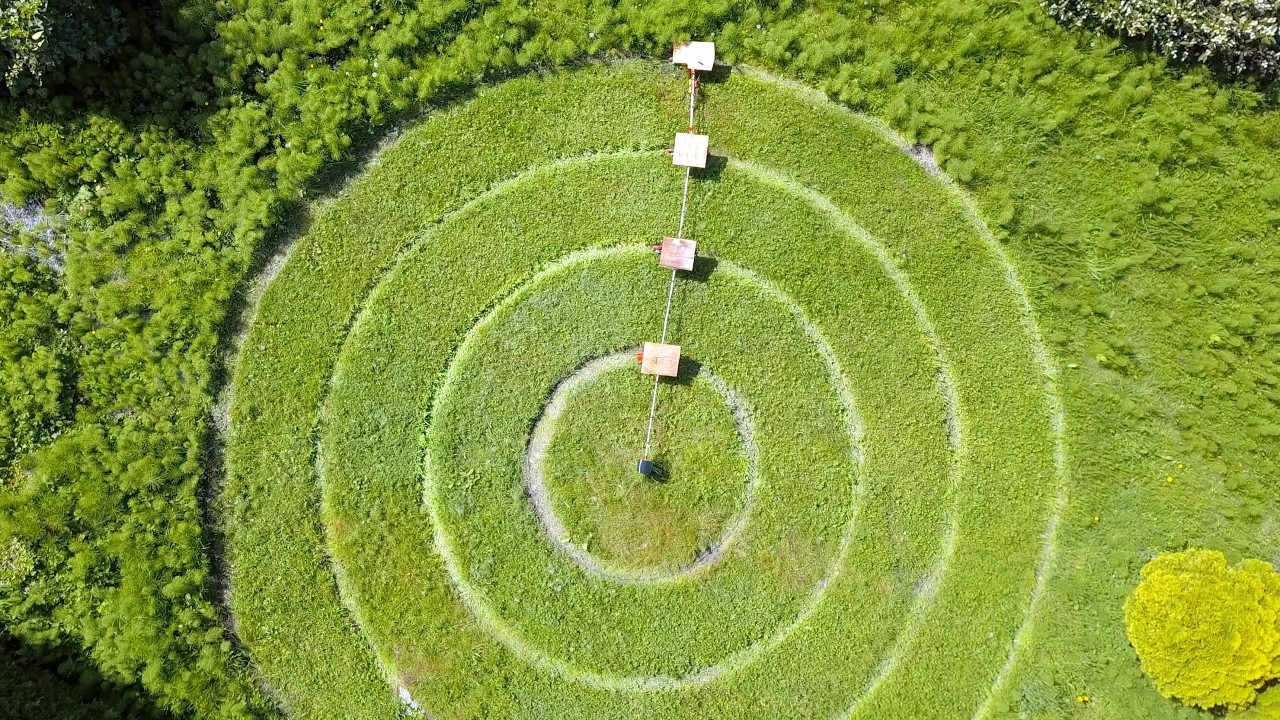
On the other track, quieter but arguably more consequential for the future of physical robotics, is a story about access. Google's Intrinsic robotics group open-sourced Intrinsic Core, a ROS-compatible platform offering hardware-agnostic tools for motion planning, grasp planning, pose estimation, and simulation. Michelle Lu, the former NVIDIA engineer behind Isaac Gym, appeared on Robot Talk to discuss how simulation is accelerating robot learning for teams that could never afford to train directly on physical hardware. And in a delightfully unglamorous corner of the internet, a hobbyist repurposed a center-pivot irrigation system into an autonomous lawn mower, while a student named Jude Robinson built a robot that ties literal daisy chains using little more than two gantries, a scalpel, and clever mechanical constraints.
These stories don't make for flashy keynote slides, but together they describe something important: the barrier to building useful, even delightful, physical robots is dropping fast. A decade ago, developing a reinforcement-learning policy for a legged robot or a precision manipulation task required a university lab, a six-figure robot, and a team of PhDs. Today, GPU-accelerated simulators let researchers train policies in parallel digital environments before ever touching hardware. Open-source platforms like Intrinsic Core hand hobbyists and startups the same planning and perception stacks that a trillion-dollar company would otherwise guard. And apparently, a determined enthusiast with spare irrigation parts and a drivetrain can build an autonomous mower in a garage.
This matters because the AI industry's current narrative is overwhelmingly about scale — bigger models, bigger context windows, bigger datasets, bigger capital raises. But robotics has always been bottlenecked less by intelligence and more by the physical world's stubborn refusal to be tidy: friction, terrain, deformable objects, edge cases that no simulator fully anticipates. The University of Toronto's Pogo-Bot, with its compliant foot pad adapting to sand and ice, and EPFL's scalable robotic fish, which maintains swimming performance from 0.6 to 2.9 meters by tuning a single tail-rod parameter, are reminders that solving embodiment problems often comes down to clever, low-cost mechanical design rather than more parameters.
The real risk in this moment is that the industry's attention, funding, and talent keep flowing toward language-model scaling while the democratization of robotics tooling — simulation, open-source stacks, affordable hardware — quietly does more to expand who can build useful machines. If Intrinsic's bet on open infrastructure pays off, and if simulation platforms like Vsim keep lowering the cost of training embodied agents, the next breakthrough robot might not come from a frontier lab's keynote. It might come from someone's garage, repurposing parts never meant for robotics at all.