

Robots Are Learning to Swim — And That's Actually Important
There's a fish robot sitting in a lab at EPFL that nobody's talking about. It's called ZBot, it's scaled 200 times larger than a larval zebrafish, and it just demonstrated something that could reshape how we think about mobile robotics entirely: intermittent motion is more efficient than constant motion.
This sounds obvious when you say it out loud. Real fish don't swim continuously — they burst forward, then glide, then burst again. But somehow, the robotics industry has spent decades building machines that move in exactly the opposite way: constant motor engagement, continuous power draw, perpetual motion. We've been designing robots like 19th-century locomotives when we should have been studying zebrafish.
The EPFL research team used a neurocomputational model to prove what marine biologists have known for years: bout-and-glide swimming dramatically improves energy efficiency. But here's where it gets interesting for anyone building robots that aren't fish. The principle scales. It applies to wheeled platforms. It applies to walking machines. It applies to any system where momentum can be conserved between active propulsion phases.
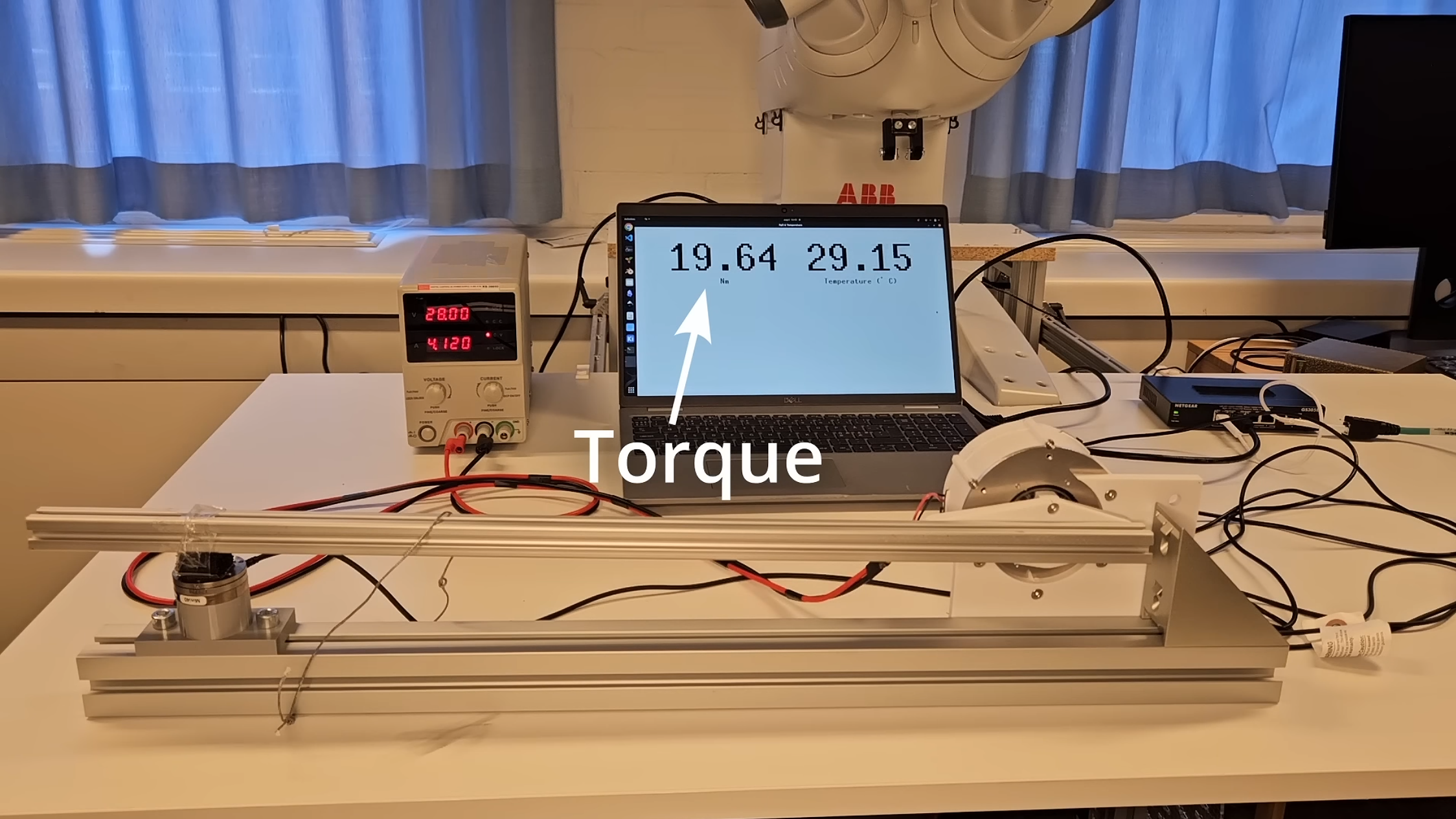
Look at the recent announcement from PlusAI about their autonomous trucks hitting commercial readiness milestones. Or consider the warehouse robotics discussion scheduled for later this month about scaling AMR fleets. Every single one of these platforms is burning energy continuously when they could be leveraging intermittent motion strategies. The DIY builder working on walking robot actuators capable of 20 Newton-meters of torque? That torque requirement drops significantly if the robot learns to coast.
This isn't just about battery life, though that matters enormously for autonomous systems operating in remote environments like the U.S. Army's TALUS distribution system. It's about fundamental rethinking of control algorithms. Right now, most mobile robots treat movement as a binary: go or stop. The zebrafish approach introduces a third state: glide. That middle state is where the efficiency lives.
The robotics industry has a bad habit of ignoring research that doesn't immediately translate to humanoid form factors or industrial automation. Bio-inspired robotics often gets dismissed as academic curiosity — interesting, sure, but not commercially relevant. The EPFL work proves otherwise. When you scale a larval fish's locomotion strategy up 200 times and it still works better than conventional approaches, you're looking at a universal principle.
What makes this particularly timely is the convergence with AI-driven control systems. The burst-glide-burst pattern isn't something you'd necessarily hand-code. It's exactly the kind of optimization that modern reinforcement learning excels at discovering. Combine the EPFL team's neurocomputational model with the type of training infrastructure that companies like OpenAI and Anthropic are building, and you get mobile robots that teach themselves to move like organisms that have spent millions of years perfecting energy efficiency.
The practical implications hit fast. Delivery robots that can operate twice as long on a single charge. Inspection drones that extend their range by 40%. Autonomous vehicles that reduce their energy footprint without sacrificing performance. Agricultural robots that can cover larger fields. The list extends across every category of mobile robotics.
ZBot won't make the cover of any magazines. It doesn't have a humanoid face or a venture capital valuation. But the principle it demonstrates — that biological locomotion strategies contain solutions to problems we're still trying to solve with brute force engineering — deserves more attention than another demo of a robot doing parkour.
Sometimes the most important robotics breakthroughs look like fish tanks.