

Robots Are Starting to Feel Things
For years, the headline metric in robotics has been capability: how much weight can it lift, how fast can it walk, how precisely can it navigate. But a cluster of recent research suggests the field is quietly pivoting toward a subtler and arguably harder problem—how robots sense and express themselves in ways that feel natural to the humans around them.
Consider CMU's new robotic fingertips, developed to give robots what researchers call a "delicate touch." Combining force sensing with vibrotactile feedback and a contact microphone, the fingertips let a robotic hand distinguish between the firmness needed to pick up a pill versus a potato chip—objects that would crumble or slip under a standard industrial gripper. The genuinely notable part isn't the sensing technology itself, which builds on years of tactile robotics research, but the price tag: under $100 per fingertip. That's a shift from research-grade exclusivity to something a hobbyist lab or small startup could actually afford to deploy.
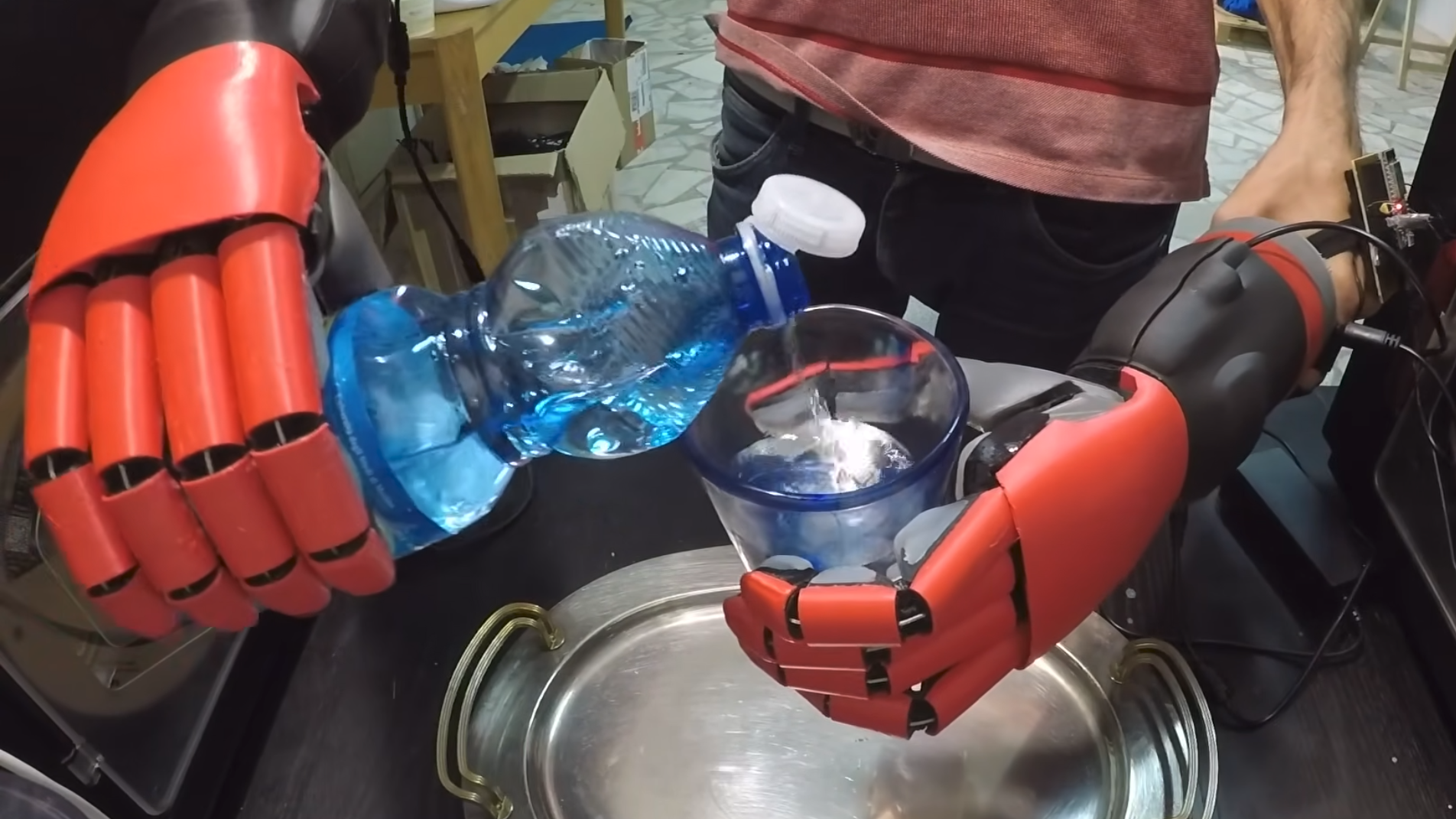
That affordability theme shows up again in the Yeah Hand, a mostly 3D-printed dexterous hand developed independently by Vittorio Lumare. Using fishing-line tendons to mimic human finger mechanics, the hand can lift 8 kilograms and apply 5 kilograms of grasping force—figures that would have required expensive actuators and custom engineering a decade ago. Both projects point to the same underlying trend: the physical building blocks of human-like touch and dexterity are becoming cheap enough that they're no longer the bottleneck. The bottleneck is increasingly software, calibration, and knowing what to do with that sensory data.
Meanwhile, University of Glasgow researchers are tackling an entirely different sense: how robots should look and sound to maximize emotional engagement. Using augmented reality to test facial designs and vocalizations, the team found that animal-like or anime-style faces paired with the right voice produced the strongest emotional response from users. It's tempting to dismiss this as a cosmetic concern next to the hard engineering of tactile fingertips, but it's solving the same essential problem from a different direction: making robots legible to humans, whether through touch feedback, facial expression, or the subtler cues of how they move and sound.
Taken together, these threads describe a robotics industry maturing past its obsession with raw mechanical performance and toward the question of interface—not interface in the screen-and-button sense, but in the sense of how a machine communicates competence, intention, and safety through its physical presence. A warehouse arm doesn't need a face. A home assistant that hands you a pill, or a care robot that needs to be trusted by an elderly user, almost certainly does.
The risk is that this sensory and expressive layer gets treated as a nice-to-have, bolted onto systems after the "real" engineering is done. The CMU and Glasgow research suggests otherwise: touch and expression aren't decoration, they're functional requirements for robots meant to operate safely and acceptably around people. As dexterous hands and expressive faces get cheaper and more capable, the companies that treat sensation as core engineering—rather than an afterthought—are the ones likely to build robots people actually want in their homes, hospitals, and daily lives.