
Spectrometers, Submarines, and the Democratization Nobody Expected
There's a curious pattern emerging in robotics and AI news that nobody seems to be discussing directly: the equipment is shrinking, and the barriers are collapsing.
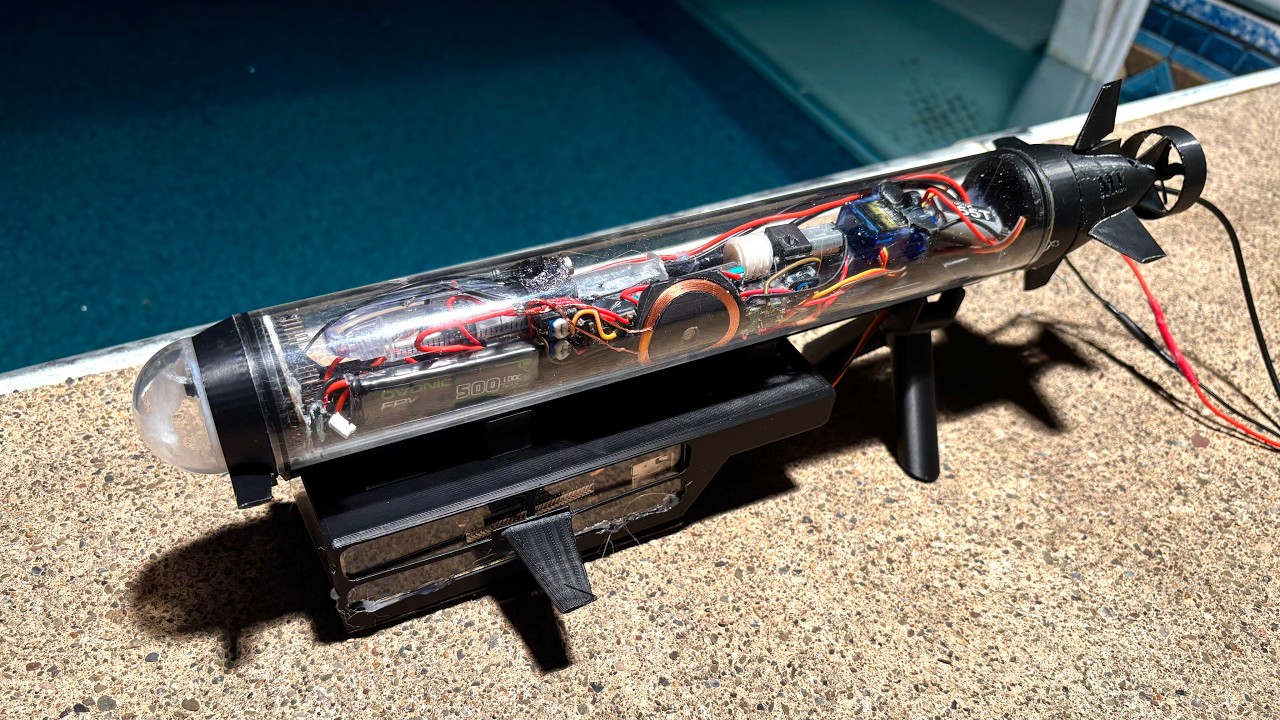
Consider what happened last week. UC Davis researchers announced an AI-powered spectrometer smaller than a grain of sand that matches lab-quality accuracy. Meanwhile, a DIY enthusiast documented building an autonomous submarine using color detection, a Raspberry Pi, and components you could order tonight. These aren't related projects, but they're symptoms of the same phenomenon.
For decades, advanced robotics and sensing technology lived exclusively in well-funded institutions. Spectrometers were expensive lab equipment. Autonomous underwater vehicles were military or research institution territory. The expertise, the components, and the computational power required created natural moats around these technologies.
Those moats are evaporating at an accelerating pace, and AI is the solvent.
The UC Davis spectrometer replaces traditional bulky optical components with neural networks and engineered silicon sensors. It's not just miniaturization—it's a fundamental reimagining of how sensing works when you can offload complexity to machine learning. The DIY submarine project, documented in recent maker communities, demonstrates how accessible computer vision and inexpensive controllers have become. What once required specialized navigation systems now runs on algorithms that a hobbyist can implement over a weekend.
This democratization extends beyond individual projects. When a researcher reverse-engineers Unitree's proprietary motor firmware with the explicit goal of developing open-source alternatives, they're not just hacking hardware—they're attacking the very business models that keep advanced robotics expensive and inaccessible. The Unitree GO-M8018-6 motors power commercial quadruped robots, but there's no technical reason they should remain locked behind proprietary control systems.
The implications reach further than most industry observers acknowledge. If spectrometers can shrink to sand-grain size through AI-powered redesign, what else can? If autonomous navigation becomes a weekend project, what complex systems are next? The pattern suggests we're entering an era where the limiting factor isn't access to sophisticated hardware—it's imagination and implementation skill.
This matters enormously for the robotics industry's future trajectory. Large companies and research institutions still dominate headlines with multimillion-dollar humanoid projects and enterprise deployments. But the real innovation velocity might be shifting to a distributed network of researchers, students, and makers who can now afford to experiment with technologies that were completely out of reach five years ago.
The challenge for established players isn't competition from other well-funded labs—it's the unpredictability of what emerges when thousands of people suddenly gain access to capabilities that used to require institutional backing. When a grain-sized spectrometer can do lab-quality analysis, or a hobbyist can build an autonomous submarine, the next breakthrough might come from anywhere.
Industry leaders obsessed with the humanoid robot race or enterprise AI deployments might be looking in the wrong direction. The most disruptive robotics innovations of the next decade might not come from Boston or Silicon Valley. They might come from someone's garage, powered by democratized AI and components that suddenly became accessible to anyone willing to learn.
That's not a trend. That's a phase change.