
Teleop Is the New MVP — And That's Actually Fine
There's a peculiar tension in robotics right now. We're supposed to be building autonomous systems, yet some of the most promising robotics companies are explicitly designed around human operators sitting at remote consoles, joysticks in hand.
Avatar Robotics just raised $6.5 million specifically to deploy semi-humanoid robots controlled by remote operators. Their pitch isn't "we'll automate your warehouse eventually"—it's "we're automating with humans in the loop, and that's the point." The company collects operational data while humans teleoperate, slowly building the training corpus that might, someday, enable full autonomy.
This isn't a new strategy, but it's becoming more explicit. The model used to be: teleoperate until the AI catches up, then phase out the humans. Now? Companies are building entire business models around permanent human-robot collaboration, where the remote operator isn't a temporary crutch but a permanent feature.
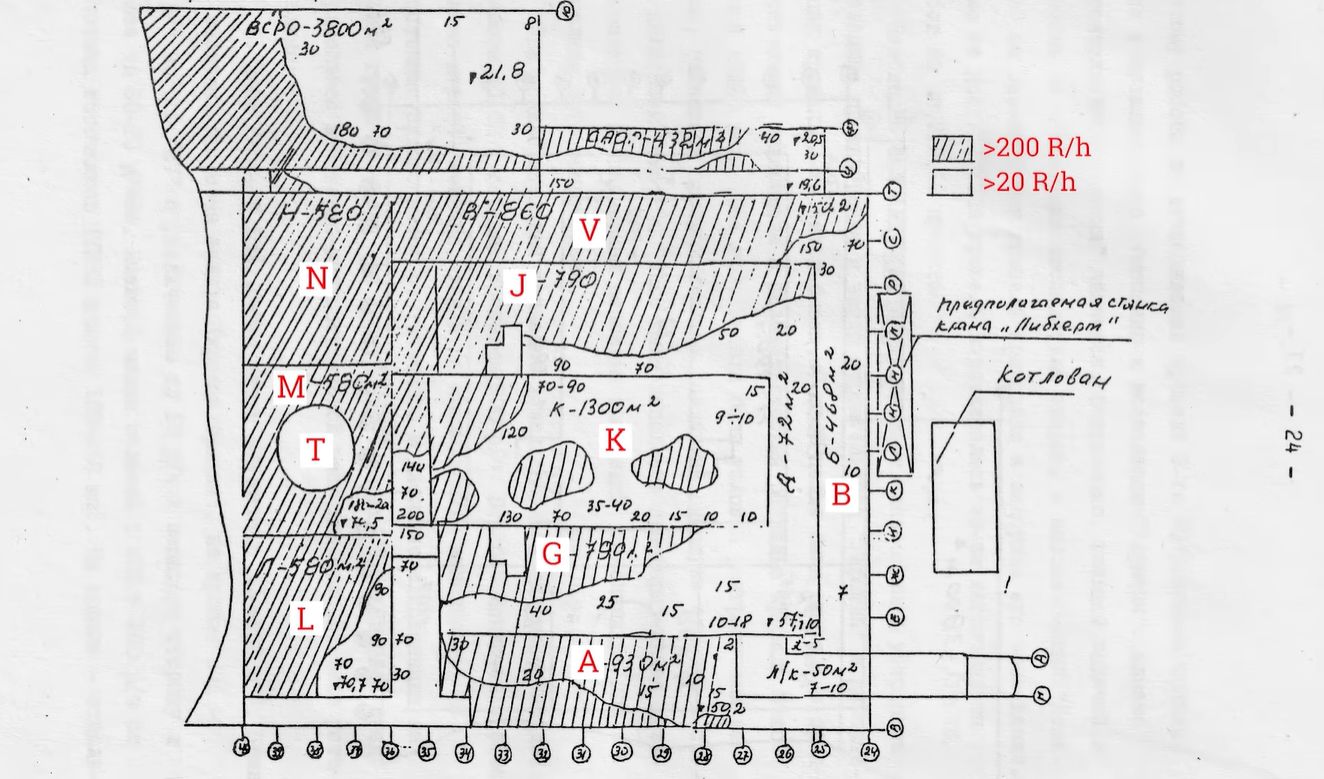
Look at the historical precedent. When Soviet engineers faced the Chernobyl cleanup in 1986, they deployed dozens of specialized robots in what amounted to a chaotic hardware hackathon. Many of those machines were remotely operated—not because the technology wasn't advanced enough for autonomy (though it wasn't), but because the problems were too novel, too unpredictable, too high-stakes for any programmed system to handle.
Fast forward forty years, and we're seeing the same calculus play out in less dramatic settings. Nomagic is deploying "physical AI systems" in warehouses, but the emphasis on "intelligence and adaptability" suggests significant human oversight. Path Robotics and GrayMatter Robotics just signed agreements worth up to $900 million with Huntington Ingalls Industries for shipbuilding applications—environments where stakes are high and variability is enormous.
The pattern is clear: when robots move from controlled environments into messy reality, humans come along for the ride.
What's changed is the narrative. Instead of treating teleoperation as a embarrassing admission of technical limitation, companies are positioning it as a feature. Remote operation means faster deployment, lower risk, and immediate value delivery. It sidesteps the crushing weight of edge cases that have bedeviled autonomous vehicles for years. And crucially, it generates training data from real-world operations rather than simulated environments.
MIT's SceneSmith project, which uses AI agents to generate realistic 3D training environments, represents the other approach: perfect the simulation, then deploy. But simulation has limits. Reality is weird. Objects behave unexpectedly. Lighting changes. Humans do inexplicable things. No matter how sophisticated your virtual playground, it can't capture everything.
Teleoperation offers a different bargain: accept that full autonomy is hard, maybe decades away for complex tasks, and build profitable businesses in the meantime. The humans don't need to be on-site. They don't need specialized training for every robot model. They can supervise multiple machines, step in when things get weird, and gradually hand over routine tasks as the AI improves.
Is this the gleaming autonomous future we were promised? No. But it might be the one that actually works—and works now, not in some perpetually receding future. The companies betting on teleoperation aren't giving up on autonomy. They're just refusing to wait for it.
That's not surrender. It's pragmatism. And in an industry that's spent years overpromising and underdelivering, pragmatism might be exactly what we need.