
The Assembly Line Is Learning to Feel
Touch is the sense we've been ignoring.
For years, the robotics industry has obsessed over vision systems and AI models, pouring billions into teaching machines to see and think. Meanwhile, the humble sense of touch — the one that lets you know you're holding an egg instead of a tennis ball — has languished in the background. That's starting to change, and the implications for industrial automation are bigger than most people realize.
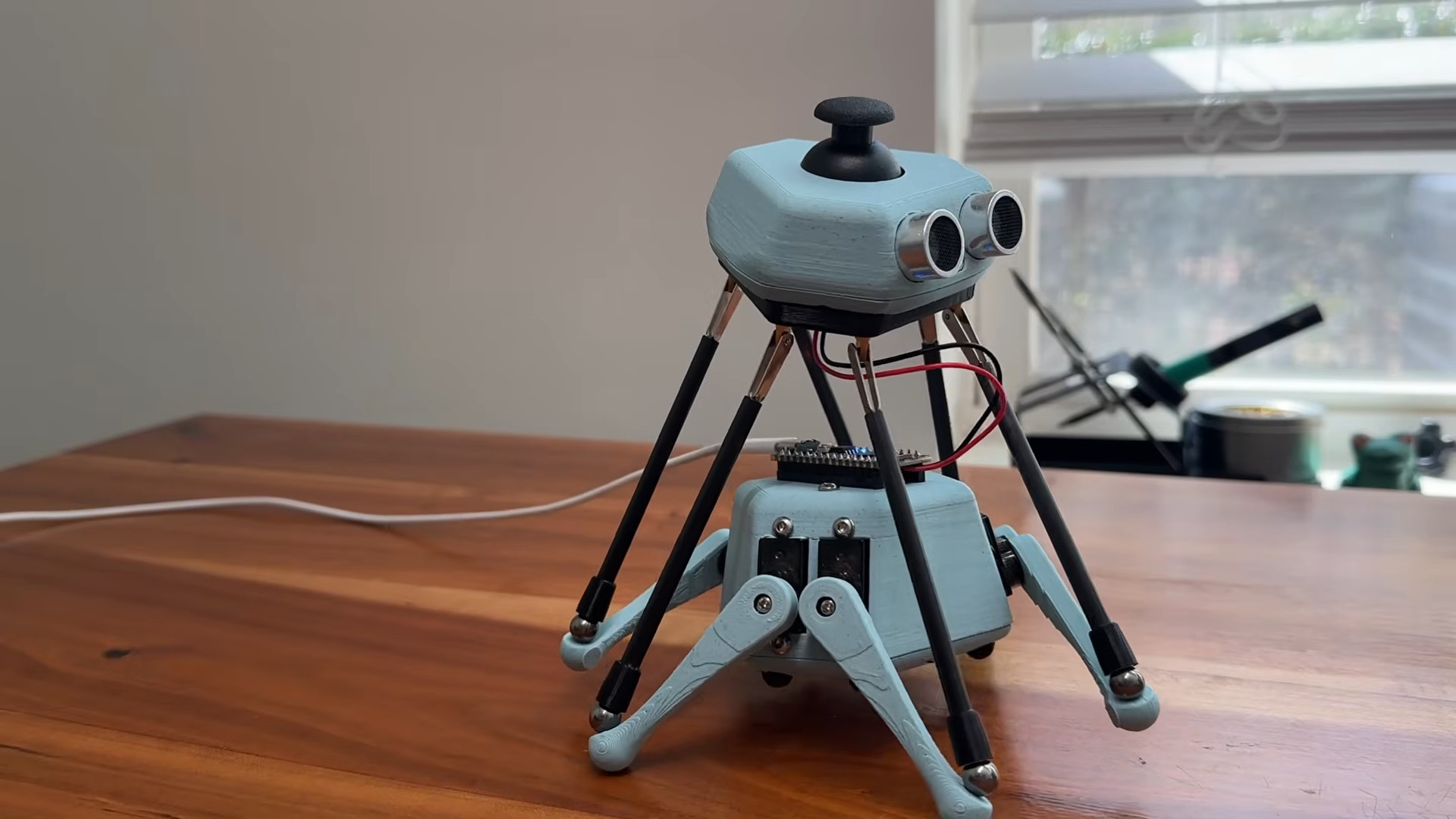
Consider three seemingly unrelated developments from the past week. A hobbyist named Stewy modified a hexapod walker to detect force by measuring voltage drops across servo motor resistors. Huntington Ingalls Industries signed a $900 million agreement to deploy robotic sanding systems for Navy shipbuilding. And igus launched an energy chain system that can handle 600-degree rotations on compact assembly robots.
What connects these stories isn't obvious until you look at what's missing from industrial robotics: reliable, affordable tactile feedback at scale.
The hobbyist's resistor hack is particularly telling. By applying basic Ohm's law to existing servo motors, they gave their robot the ability to sense torque and force without expensive sensors. It's an elegant solution to a problem that's plagued industrial automation for decades — how do you teach a robot when it's pushing too hard without breaking the bank on force-torque sensors?
Meanwhile, HII's massive investment in robotic sanding systems points to why this matters. Sanding requires constant pressure adjustment based on surface feel. Too much force and you gouge the material. Too little and you're wasting time. Human workers do this instinctively through tactile feedback. Robots? They're still learning.
The proliferation of compact industrial robots — the kind that need igus's new cable management solutions — creates even more urgency. These smaller robots work in tighter spaces, often alongside human workers. They need to know not just where they are, but what they're touching and how hard they're gripping. A robot that can see a part is one thing. A robot that can feel when that part is slightly warped and adjust accordingly is something else entirely.
We're seeing the convergence of three trends: cheaper tactile sensing (even if it's jerry-rigged from existing components), AI models capable of processing complex sensory data in real-time, and industrial applications desperate for more adaptive automation. Edge computing platforms like the AMD Ryzen-powered quadruped inspection robots from Avnet and Weston Robot are making it possible to process this tactile data locally, without cloud latency.
The dirty secret of industrial robotics is that most factory robots are actually pretty dumb. They follow predetermined paths with millimeter precision, but they have no idea what they're actually doing. They're blind, deaf, and numb — executing choreographed movements in controlled environments.
Tactile sensing changes that fundamental equation. A robot that can feel is a robot that can adapt, that can work with variation, that can handle the messy reality of real-world manufacturing instead of pristine lab conditions.
The hobbyist who added force sensing to Stewy using resistors and Ohm's law might seem worlds away from Navy shipbuilding contracts and industrial cable management systems. But they're all working on the same problem: teaching robots to feel their way through tasks that have always required human touch.
When touch finally comes to the assembly line at scale — and these developments suggest it's coming faster than expected — we'll look back and wonder why it took so long. After all, you can't build a truly autonomous system if it doesn't know its own strength.