
The Autonomous Lab Revolution: How AI Is Finally Moving From Code to Physical Science
Amid the endless stream of news about AI chatbots, social networks for AI agents, and which company is monetizing which model, a genuinely transformative development has emerged with far less fanfare: AI systems are now independently conducting physical scientific experiments.
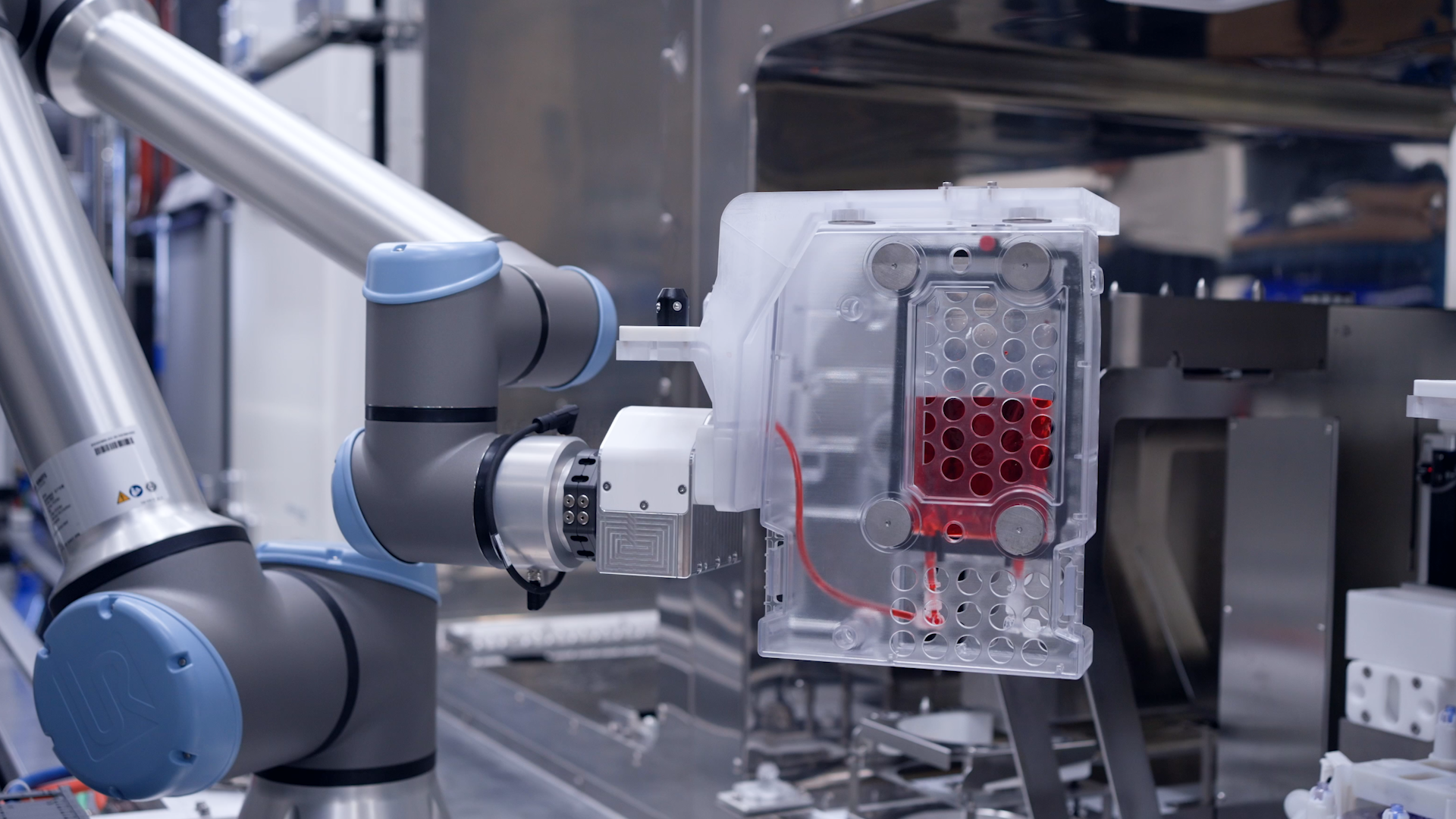
The recent announcement that GPT-5 integrated with Ginkgo Bioworks' cloud automation platform achieved a 40% cost reduction in cell-free protein synthesis represents something fundamentally different from the AI applications dominating headlines. This isn't an AI writing code, generating images, or even controlling software interfaces. This is an AI system operating in the messy, physical world of biology—mixing compounds, running reactions, analyzing results, and iteratively optimizing processes through closed-loop experimentation.
The significance extends far beyond one successful experiment. For decades, laboratory science has been constrained by human bandwidth, intuition, and the sheer tedium of systematic exploration. A human researcher might test dozens of experimental conditions in a month. An autonomous lab system can test thousands in a week, learning from each iteration and adjusting its approach in real-time.
What makes this development particularly noteworthy is its timing. While companies race to create AI agents that can browse websites or post to social media—applications that frankly feel like solutions searching for problems—autonomous laboratory systems address genuine bottlenecks in scientific progress. Drug discovery, materials science, and biotechnology all face similar challenges: massive parameter spaces, expensive experiments, and the need for systematic exploration that exceeds human capacity.
The integration of large language models with physical automation platforms also solves a critical challenge that has plagued laboratory automation for years. Previous systems required extensive custom programming for each new experiment type. Modern LLMs can interpret experimental goals expressed in natural language, translate them into executable protocols, and adapt based on results—all without requiring researchers to become automation experts.
Yet this breakthrough also highlights a peculiar asymmetry in AI development resources. Billions pour into making chatbots more conversational or creating social networks where AI agents can post memes to each other. Meanwhile, applications with clear scientific and economic value—like autonomous laboratory systems—receive a fraction of the attention and investment. The disparity reveals how much of the current AI boom remains focused on consumer engagement rather than solving hard technical problems.
The path forward for autonomous lab systems faces different obstacles than consumer AI. Regulatory frameworks for automated experimentation, especially in pharmaceutical and clinical contexts, remain underdeveloped. Laboratory equipment manufacturers have been slow to embrace open protocols and APIs that would enable broader automation. And the scientific community itself harbors understandable concerns about reproducibility and understanding results generated without human oversight at every step.
But these are solvable problems, and the incentives are clear. A 40% cost reduction in protein synthesis isn't incremental improvement—it's the kind of efficiency gain that reshapes entire industries. As more research institutions and biotech companies deploy similar systems, we'll likely see an acceleration in scientific discovery that makes today's progress look quaint.
The autonomous laboratory represents AI finally fulfilling its original promise: not replacing human creativity, but amplifying it by handling the systematic, repetitive work that consumes so much research time. While the tech world obsesses over which AI can best mimic human social media behavior, the real revolution is happening in labs where AI systems are discovering things no human would have time to find. That's a story worth paying attention to.