
The Brain-Inspired Computing Renaissance: Why Neuromorphic Systems Are Finally Solving Real Problems
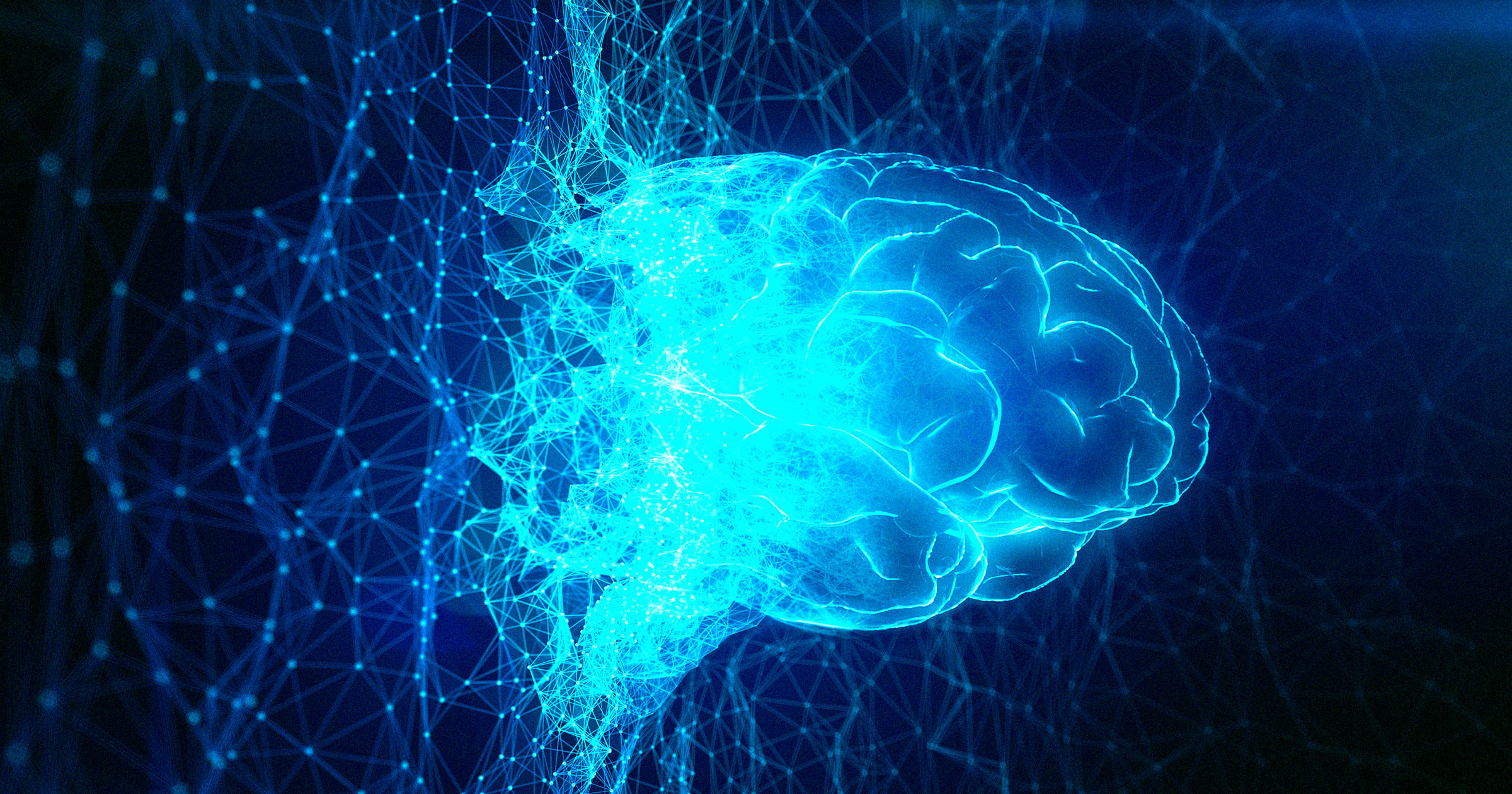
For years, neuromorphic computing has lived in the shadow of mainstream AI development, perpetually described as "promising" but rarely delivering transformative results. That's changing in 2025, and the implications extend far beyond academic curiosity.
Sandia National Laboratories' recent demonstration that neuromorphic computers can efficiently solve partial differential equations represents more than a technical achievement—it signals a fundamental shift in how we approach computational problems. PDEs are the mathematical backbone of everything from weather forecasting to drug discovery, traditionally requiring massive supercomputers that consume enormous amounts of energy. The fact that brain-inspired architectures can tackle these problems efficiently isn't just impressive; it's potentially transformative for fields where computational costs have been prohibitive.
What makes this moment particularly significant is that it's not happening in isolation. Consider the recent announcement that GPT-5.2 independently derived a novel formula for gluon amplitudes in theoretical physics—a result that was subsequently formally proven. While this emerged from a transformer-based architecture rather than explicitly neuromorphic hardware, it represents the same underlying principle: systems that process information in fundamentally different ways can discover solutions that elude traditional approaches.
The convergence is telling. We're seeing multiple architectures—neuromorphic chips, advanced language models, and hybrid systems—all demonstrating an ability to tackle problems that require a different kind of "thinking" than step-by-step algorithmic processing. These aren't incremental improvements in speed or efficiency; they're qualitative differences in problem-solving capability.
The energy angle deserves particular attention. As AI systems scale, their power consumption has become an increasingly urgent concern. Data centers running large language models already consume staggering amounts of electricity, and the trajectory is unsustainable. Neuromorphic systems, designed to mimic the brain's remarkable energy efficiency, offer a potential path forward. If we can solve computationally intensive problems with a fraction of the power, it changes the economic and environmental calculus of entire industries.
But perhaps the most intriguing aspect is what this means for the future of AI development. The tech industry has largely bet on scaling existing architectures—bigger models, more parameters, more training data. The success of brain-inspired approaches suggests there may be untapped potential in fundamentally different computational paradigms. We don't need to choose between these approaches; hybrid systems that combine the strengths of multiple architectures could unlock capabilities we haven't yet imagined.
The challenge now is translating laboratory breakthroughs into practical applications. Neuromorphic computing has suffered from a commercialization gap—impressive demos that never quite make it to market. The fact that we're now seeing real-world problem-solving, from PDEs to theoretical physics, suggests we may finally be crossing that threshold.
This isn't about neuromorphic systems replacing traditional computing or even mainstream AI. It's about expanding our computational toolkit to include approaches that excel at different types of problems. Some challenges are best solved by brute-force calculation. Others require the kind of pattern recognition and adaptive processing that brain-inspired systems excel at. The most exciting developments will likely come from knowing which tool to use when—and from systems that can seamlessly integrate multiple approaches.
The brain-inspired computing renaissance isn't just about mimicking biology. It's about recognizing that fifty years of following one computational paradigm may have left entire classes of problems unsolved simply because we weren't asking the right questions in the right way.