
The Cloud Is Becoming Optional
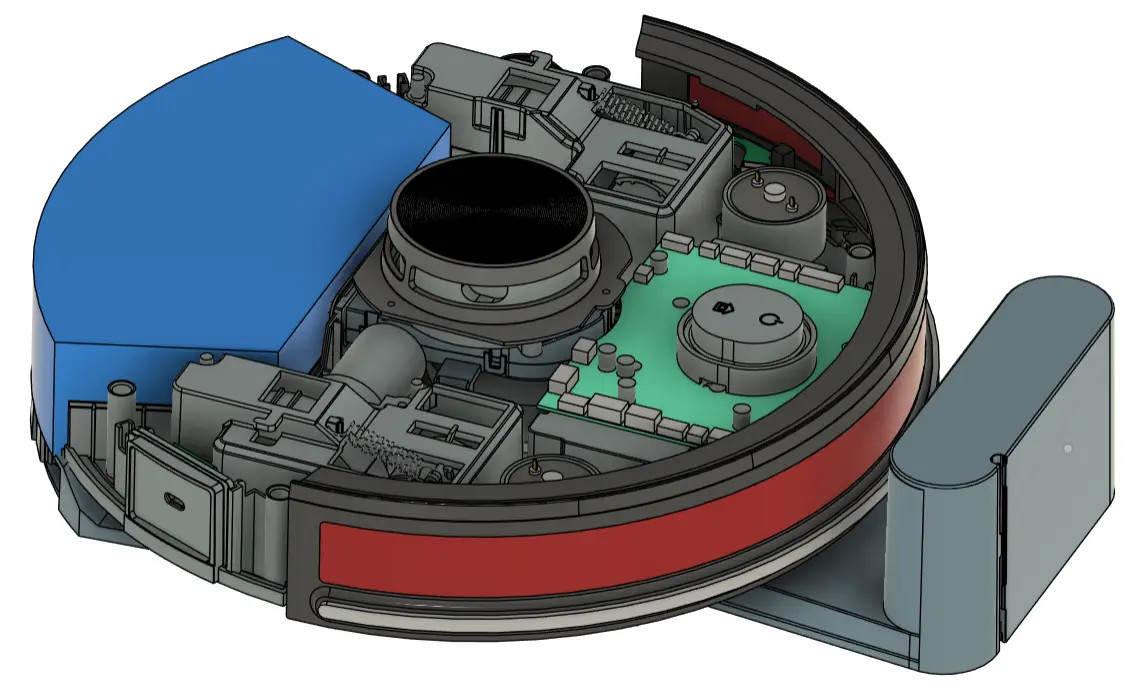
OOMWOO is not a company you'll see on TechCrunch's unicorn tracker. It's an open-source vacuum cleaner project built around a Raspberry Pi and 2D lidar, designed explicitly to avoid cloud services. On the surface, it reads like hobbyist rebellion against corporate surveillance — the kind of project that gets 200 GitHub stars and fades into obscurity.
But look closer at this week's news and something more significant emerges. While most robotics headlines scream about billion-dollar valuations and foundation models trained on 500,000 hours of data, a quiet counter-movement is gaining ground: robots designed to function without constant internet tethers.
Tesla's Cybercab announcement included a detail that seems contradictory at first — it features a built-in Starlink V5 satellite dish alongside 5G connectivity. Why would an autonomous taxi need satellite internet? The answer reveals the tension: redundancy. Tesla clearly doesn't trust that cellular networks will always be available, so they're building vehicles that can maintain fleet communication through multiple pathways. But underneath that engineering decision is an admission that constant cloud connectivity is a liability, not just an asset.
The robotics industry has spent the past five years evangelizing cloud-based architectures. Training happened in the cloud. Model updates pushed from the cloud. Fleet management coordinated through cloud dashboards. The assumption was universal: more connectivity equals better robots.
That assumption is cracking. Latency matters more than we admitted. Security breaches matter more than we admitted. And in industrial settings — where Holiday Robotics is deploying wheeled humanoids and Generative Bionics is putting tactile-sensing robots into shipyards — relying on stable internet access is a nonstarter.
The OOMWOO vacuum isn't revolutionary because it's innovative. It's notable because it represents a design philosophy that's spreading: build local-first, cloud-optional systems. Train models centrally if you must, but deploy them to run autonomously. Use connectivity for updates and monitoring, not core functionality.
This matters because the next wave of robotics deployment won't happen in well-connected warehouses with fiber-optic backbones. It'll happen in mines (as ATOMS is planning), in developing countries, in disaster zones (where Carnegie Mellon just deployed snake robots in Venezuela), and in operating rooms where network latency could mean the difference between precision and disaster.
AMD's new Kria AI Robotics platform emphasizes deterministic real-time control and unified memory architectures — features that matter most when you can't offload processing to distant servers. Medtronic's Touch Surgery Aide brings AI compute directly into the OR. These aren't just performance optimizations. They're architectural decisions that acknowledge cloud dependency as a design flaw.
The industry is bifurcating. On one side: massive foundation models requiring enormous compute clusters and constant data pipelines. On the other: edge-first systems designed to function in isolation. Both will exist. But the assumption that every robot needs to be permanently online is dying.
A Raspberry Pi vacuum cleaner didn't kill it. The physics of real-world deployment did. OOMWOO just made it explicit.