
Universities Are Building the AI Partnerships That Industry Can't
Something shifted in the past week. Flip through robotics news and you'll notice a pattern: universities aren't just researching anymore — they're orchestrating.
Amazon formalized a research partnership with Stanford spanning AI, energy, and healthcare. Carnegie Mellon will host IROS 2026, one of robotics' flagship conferences. Princeton engineers demonstrated breakthrough motorless robots using origami-inspired magnetic control. The University of York ran a hackathon where teams built autonomous maze-navigating robots in three days. Even the Mars rover operations, managed by NASA JPL scientists, represent academic infrastructure enabling planetary exploration.
This isn't coincidental. Universities are filling a role that industry increasingly can't: neutral ground for long-term, foundational work.
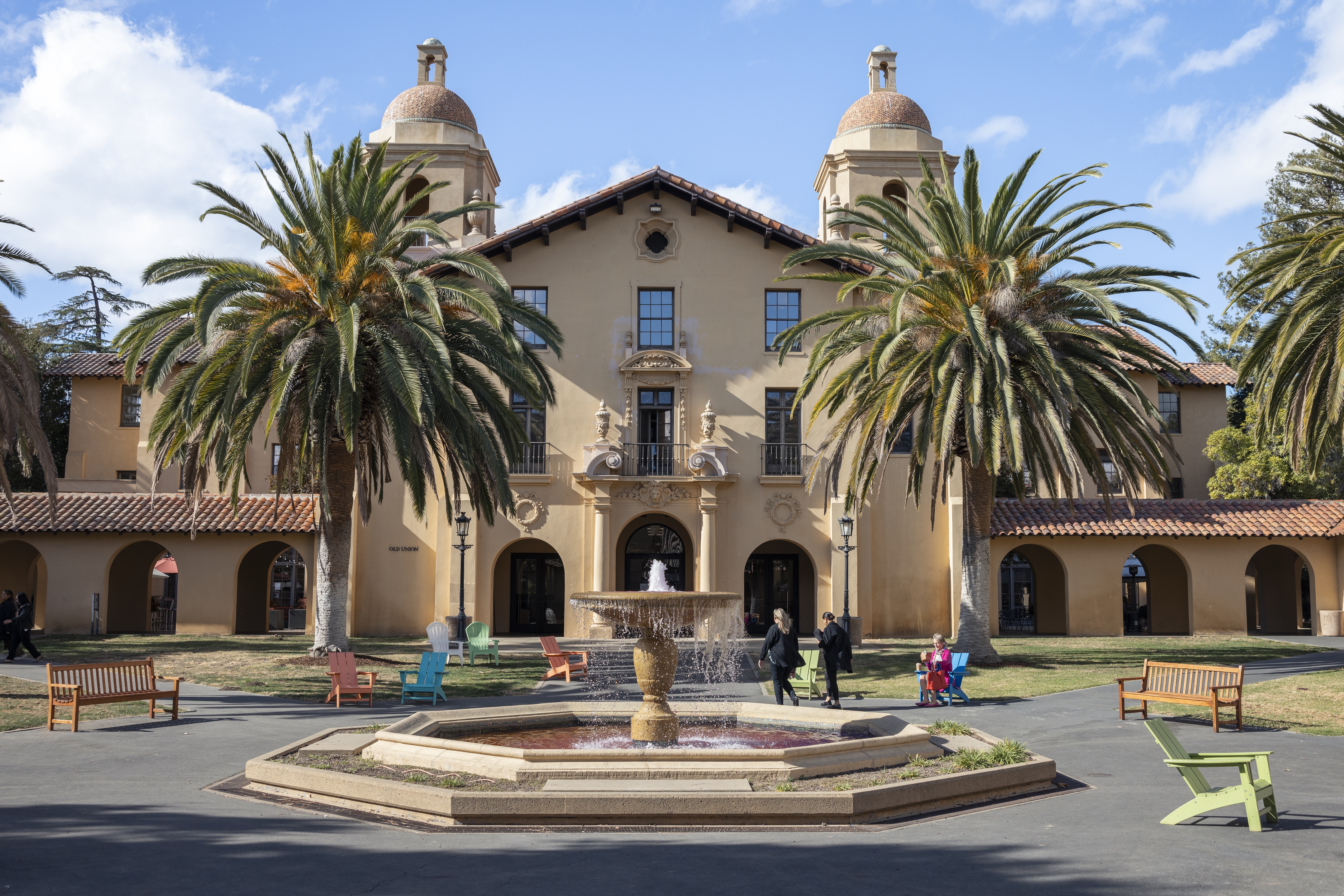
Consider what Amazon-Stanford actually means. Amazon maintains relationships with ten-plus research funding teams at Stanford alone. That's not a partnership — it's infrastructure. Companies get access to cutting-edge research and talent pipelines. Universities get funding and real-world problem validation. Most importantly, the work happens in an environment where publishing results matters more than protecting trade secrets.
Compare this to the corporate AI world, where even basic research papers now come wrapped in NDAs and partnership agreements. OpenAI's new Advisory Group on Mathematics and AI and their framework for reporting model misalignment show companies trying to build credibility through transparency. But universities already have that credibility built-in. When Carnegie Mellon hosts IROS, nobody questions whether the conference selection process favored commercial interests.
The diversity of university work also matters. Princeton's motorless robots represent fundamental materials science. York's hackathon teaches practical robotics skills. ETH Zurich's walking robotic hand (trained via reinforcement learning and simulation) bridges theory and application. EPFL researchers are proposing "Sustainability Robotics" as an entirely new discipline. These aren't product roadmaps — they're explorations of what's possible.
Industry does innovation. Universities do infrastructure.
This distinction grows more important as AI and robotics mature. Companies need quarterly results. Researchers need environments where a three-year project that "fails" can still produce valuable insights. The York hackathon didn't produce commercial products — it produced engineers who understand sensor integration and autonomous navigation. That's infrastructure.
The Amazon-Stanford partnership structure hints at where this goes. Rather than one-off research grants, we're seeing sustained institutional relationships. Multiple research teams, ongoing PhD fellowships, regular symposia. The goal isn't any single breakthrough — it's ensuring breakthroughs keep happening.
Pittsburgh hosting IROS 2026 isn't just about conference logistics. It's Carnegie Mellon asserting that robotics leadership requires more than lab work — it requires community building, knowledge sharing, and maintaining spaces where companies and researchers can interact without every conversation becoming a negotiation.
As AI deployment accelerates and robotics moves from labs to warehouses, someone needs to maintain the commons. Someone needs to run the conferences, train the next generation, publish the foundational research that doesn't have immediate commercial applications, and provide neutral ground for collaborations.
Universities are stepping into that role, not because they're anti-commercial, but because they can operate on timelines and incentive structures that companies can't match. Amazon benefits from Stanford's research. But Stanford also ensures that research happens in an environment where the results eventually become public knowledge, where students learn rather than just execute, where failed experiments still teach something valuable.
The question isn't whether universities or industry will lead AI and robotics development. It's whether we maintain institutions capable of doing the work that neither can do alone.