
Universities Are Building Tomorrow's Robots in Micromaze Arenas Today
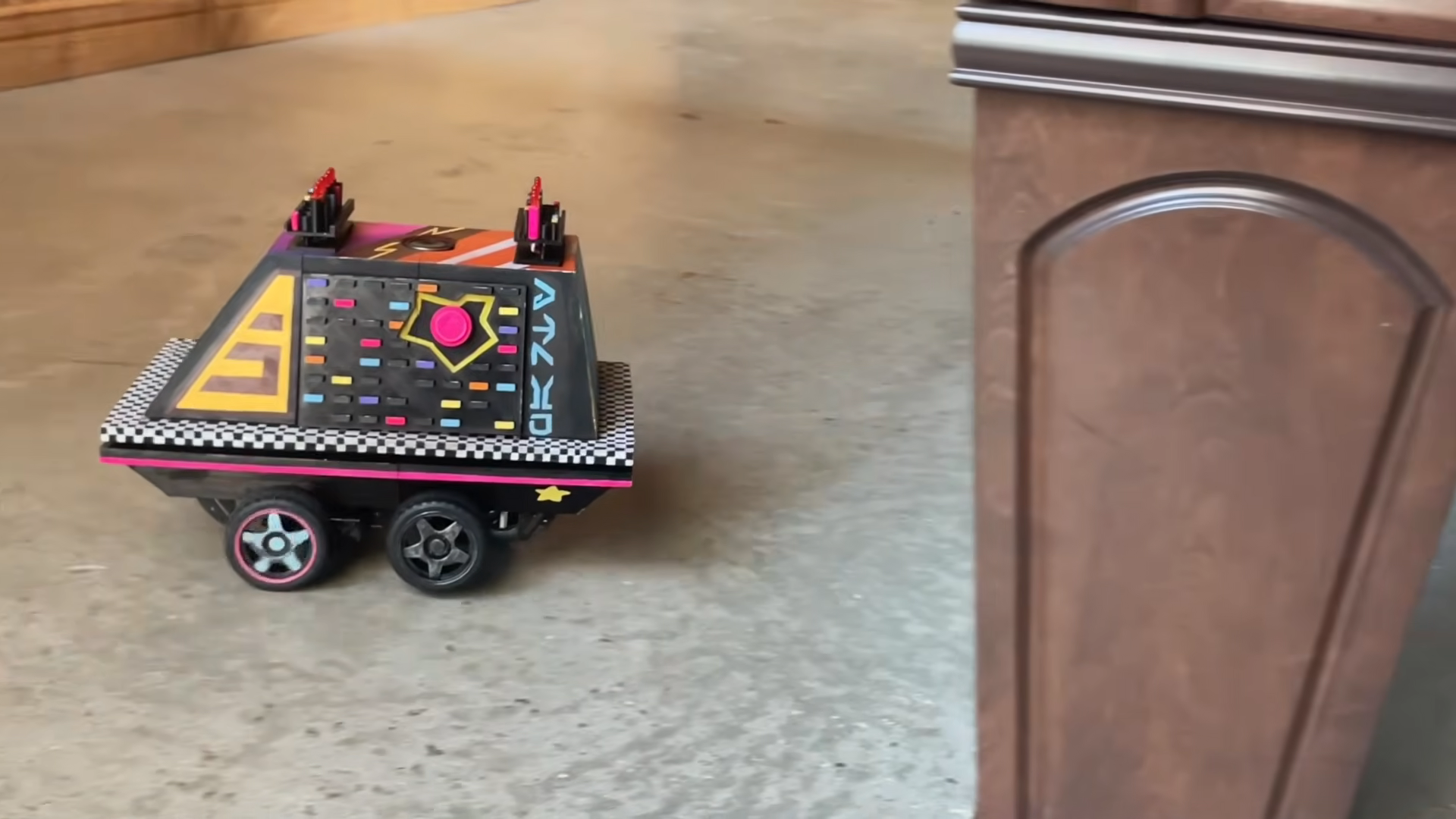
Something remarkable happened at the University of York recently that didn't involve billion-dollar valuations or frontier AI models. Over three days, students and researchers gathered for the Micromaze Robot Hackathon, where they designed, built, and programmed autonomous robots from scratch using Raspberry Pi Pico W platforms. The robots had one job: navigate increasingly complex mazes without human intervention.
This might sound quaint compared to headlines about GPT-6 Astra managing production systems or autonomous lunar rovers electing leaders. But these university hackathons represent something the AI industry desperately needs right now: people who understand robotics from first principles.
The gap between software-first AI development and physical robotics has never been more apparent. We're in an era where language models can write code, manage databases, and even conduct quantum computing experiments. Yet when it comes to robots that must navigate real physical spaces, sense their environment, and make decisions in real-time, the fundamentals still matter enormously.
The York hackathon participants weren't just coding algorithms. They were integrating sensors, calibrating motors, dealing with power constraints, and debugging hardware-software interfaces. They were learning that obstacle avoidance in a physical maze is fundamentally different from pathfinding in a simulation. When your ultrasonic sensor gives a noisy reading or your wheels slip on a smooth surface, no amount of sophisticated AI can compensate for poor mechanical design.
This hands-on approach stands in stark contrast to the current trajectory of AI development, where increasingly powerful models are being deployed into production systems with remarkable speed. Perplexity trusts GPT-6 Astra to write communications and modify software. Cognition uses it to test code autonomously. These are impressive capabilities, but they exist entirely in the digital realm.
The real world is messier. NASA's upcoming CADRE mission, which will test autonomous rovers that can coordinate and make independent decisions on the Moon, represents the other end of the spectrum: robots that must function in unforgiving physical environments where software bugs can't be patched with a quick deployment.
What's encouraging is that both approaches are advancing simultaneously. The students at York were using modern platforms like Raspberry Pi Pico W, which brings significant computing power to small-scale robotics. They're learning to program autonomous systems at a time when AI tools can accelerate development. But they're also learning the timeless lessons of robotics: that sensors fail, that battery life matters, that mechanical design constrains what software can achieve.
The robotics industry needs both. It needs the AI researchers pushing the boundaries of what's possible with machine learning and reasoning. But it also needs engineers who've spent three days debugging why their robot keeps turning left when it should go straight, who understand that theory meets reality in a maze made of cardboard and tape.
As the United States grapples with its leadership in robotics R&D versus its lag in manufacturing, these university programs become even more critical. They're not just teaching students to code; they're teaching them to build. That's a skill set that can't be outsourced to a language model, no matter how advanced.
The future of robotics won't be built by AI alone. It will be built by people who learned to program Raspberry Pis in university hackathons, who understand that autonomous systems require both brilliant algorithms and reliable hardware. While GPT-6 Astra manages cloud infrastructure, someone still needs to design the robots that will eventually use that intelligence to navigate warehouses, assist in surgery, or explore distant planets.
The micromaze may be small, but the lessons learned there are anything but.