
When Robots Start Walking on Their Hands, We've Run Out of Legs to Stand On
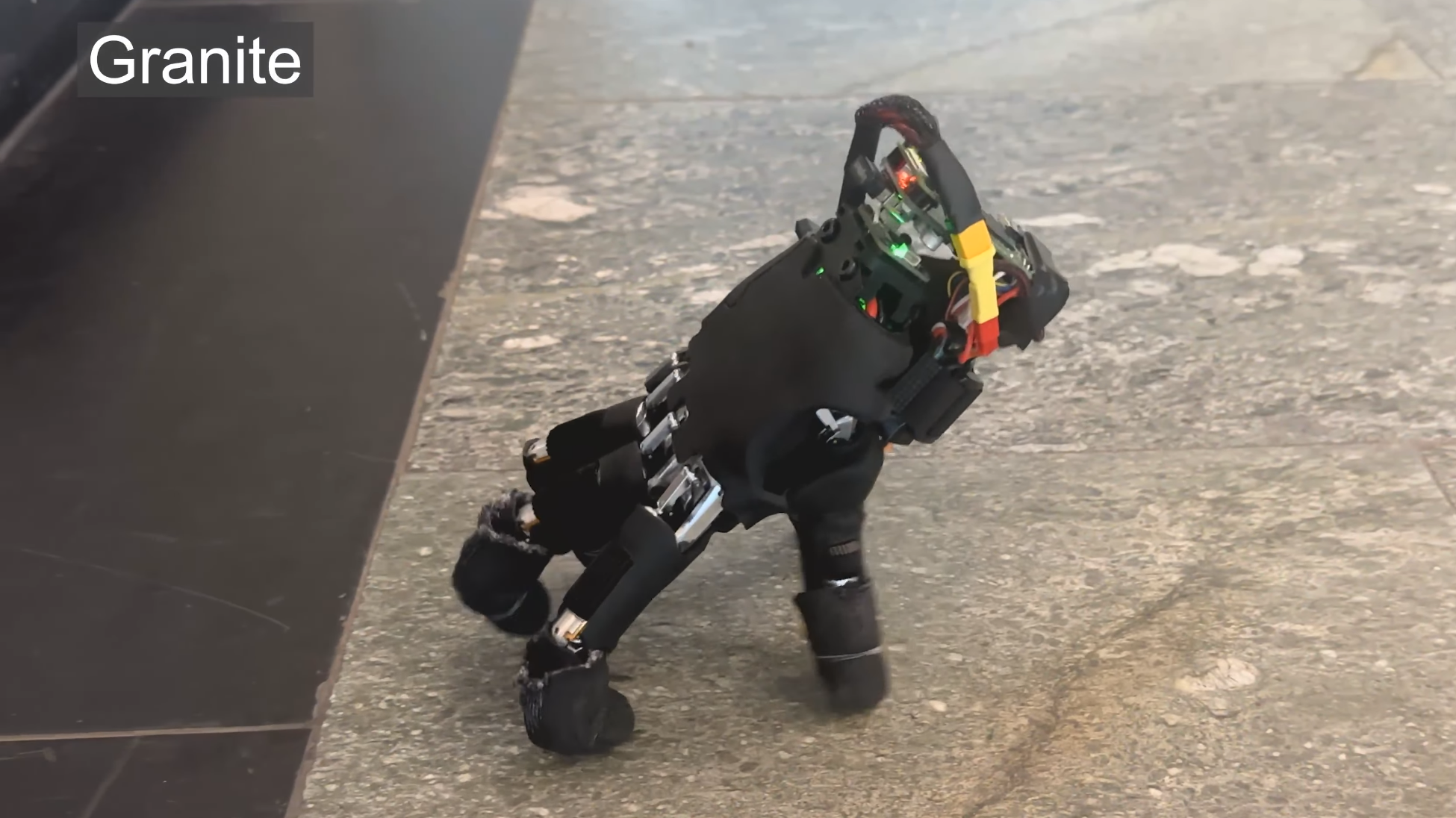
There's a robotic hand at ETH Zurich that can walk. Not metaphorically. Literally walk—across terrain, up obstacles, even operate a keyboard with its fingertips while ambulatory. It's controlled by a Raspberry Pi and trained through reinforcement learning, which means it taught itself to locomote using appendages designed for grasping.
It's technically impressive. It's also deeply weird. And that weirdness reveals something uncomfortable about where robotics research currently stands.
The walking hand is a perfect example of what happens when a field reaches a certain maturity: instead of solving new problems, researchers start finding novel applications for existing solutions. We've gotten very good at building hands. We've gotten very good at training locomotion. So naturally, someone asked, "What if we combined them in the least intuitive way possible?"
This isn't criticism of the ETH Zurich team—their engineering is solid, and the control algorithms are genuinely sophisticated. But step back and ask: what problem does a walking hand solve? What application demands ambulatory fingers? The answer, most likely, is none. This is research for research's sake, dressed up as innovation.
Contrast this with the origami-inspired motorless robots from Princeton mentioned in this month's robotics digest. Those engineers identified a genuine constraint—motors add weight, complexity, and failure points—and developed an alternative using magnetic control and multistable geometry. That's innovation driven by a real limitation. The walking hand is innovation driven by "because we can."
We're seeing this pattern across robotics. Boston Dynamics' Atlas does backflips. Humanoid robots do increasingly complex dance routines. Quadrupeds navigate obstacle courses with greater agility. All technically remarkable. All demonstrations of capabilities we already knew were theoretically possible. None of them deployed at scale solving actual problems.
Meanwhile, the less glamorous work continues mostly out of the spotlight. Industrial robots that actually ship products. Warehouse automation that actually moves boxes. Agricultural robots that actually harvest crops. These systems use "boring" technology—often decades-old kinematics and control theory—because boring technology works.
The walking hand crystallizes a troubling trend: robotics research increasingly optimizes for publication impact rather than practical deployment. A hand that walks makes for a compelling paper, a viral video, a conference keynote. A marginal improvement in pick-and-place reliability doesn't, even if the latter would transform logistics.
This matters because research directions shape funding priorities, which shape what gets built, which shapes what's possible. Every grant chasing a walking hand is a grant not improving prosthetic control, not making robotic surgery more accessible, not developing better assistive devices for people with limited mobility.
The ETH team demonstrated impressive technical skill. Their reinforcement learning pipeline works. Their sim-to-real transfer is solid. But perhaps the most important question isn't whether we can make a hand walk—it's whether we should spend our limited research resources teaching it to.
Robotics doesn't need more tricks. It needs more solutions. The difference matters more than we'd like to admit.