
Your Robot Needs Better Manners: Social Intelligence Finally Gets Its Own Software Layer
Here's a question that should make any robotics engineer uncomfortable: what stops your humanoid robot from handing a knife to a toddler?
Most answers to this involve training data, safety protocols, or hardcoded rules. Palm Garden AI's new Coherence Guard software takes a different approach: it treats social appropriateness as a separate decision layer that sits between what a robot can do and what it actually does. Think of it as an automated sense of propriety—a filter that evaluates whether actions make sense in context before allowing them to execute.
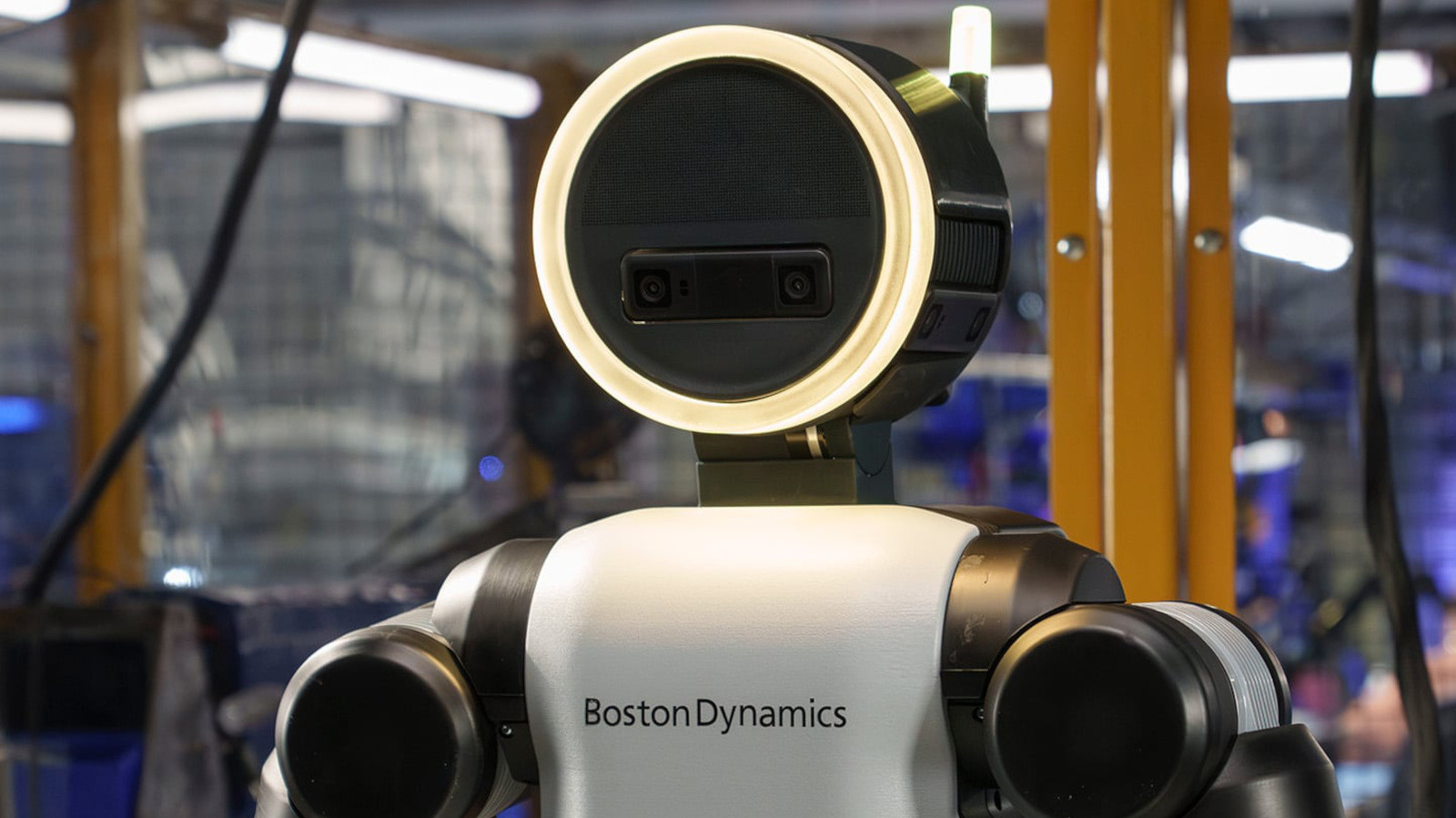
This matters more than it sounds. We've spent the last decade teaching robots to perceive, navigate, and manipulate with increasing sophistication. Boston Dynamics' Atlas can do backflips. Weave Robotics' Isaac can fold your laundry. But neither system has dedicated architecture for understanding the unwritten rules of human spaces. Until now, social reasoning has been bolted onto existing systems as an afterthought, embedded somewhere in the same neural networks handling object recognition and path planning.
Coherence Guard suggests we've been thinking about this wrong. Social intelligence isn't just another skill to train—it's a fundamental operating requirement that deserves its own software layer. The platform evaluates robot actions for social and contextual appropriateness before execution, which means it can theoretically prevent mistakes that wouldn't show up in any training dataset.
Consider the timing. We're seeing wheeled home robots like Isaac hit the market at consumer price points. Palm Garden AI's focus on "human-facing robots" and "real-world human environments" isn't academic—it's directly aligned with robots entering homes, hospitals, and retail spaces where getting social context wrong has immediate consequences.
The implications extend beyond preventing awkward interactions. If social reasoning becomes a standardized software layer rather than something each robotics company rebuilds from scratch, we might actually see interoperability standards emerge. Your robot doesn't need to be trained on your specific household's norms if it can query a relational decision layer that understands contextual appropriateness in general.
There's also a regulatory angle here that nobody's talking about yet. When Zoox recalled robotaxis for failing to handle smoke properly, the fix was a software update addressing a specific perception gap. But what happens when the problem isn't perception—it's social judgment? Coherence Guard-style systems could become the compliance architecture for robots operating in public spaces, providing auditable decision trails for why a robot chose or rejected specific actions.
The hard part, of course, is that social appropriateness isn't universal. What's polite in Tokyo differs from what's polite in Texas. Cultural context, individual preferences, and situational nuances create a combinatorial explosion of edge cases. Palm Garden AI hasn't published details on how Coherence Guard handles this complexity, which will ultimately determine whether this approach scales.
But the fundamental insight stands: if we're serious about putting robots in human environments, they need more than better sensors and stronger actuators. They need computational social awareness as a first-class system component. Teaching robots what they can do was the easy part. Teaching them what they should do might require an entirely different architecture—and we're just starting to build it.